

Employee onboarding is a digital platform that helps organizations simplify the process of welcoming new employees while equipping them with the knowledge and resources they need to succeed in their roles. By automating administrative tasks and delivering structured learning experiences, this software enables HR teams to create a seamless onboarding journey that improves productivity and employee engagement.
Modern onboarding software goes beyond paperwork. It centralizes tasks such as document collection, policy acknowledgments, training assignments, communication, and progress tracking in one platform. This ensures that new hires receive a consistent and engaging onboarding experience while helping organizations remain compliant with company policies and legal requirements.
With the right employee onboarding and training solution, businesses can reduce manual work, improve operational efficiency, and build a strong foundation for long-term employee success.
Why Employee Onboarding Software Matters
A well-designed onboarding platform delivers significant benefits to both employees and employers. Here are some of the key advantages:
- Improved Efficiency
Automating onboarding workflows minimizes repetitive administrative tasks such as completing forms, collecting signatures, assigning training modules, and managing documentation. HR teams spend less time on manual processes, allowing them to focus on strategic initiatives while helping new employees become productive faster.
- Consistent Employee Experience
Every new employee should receive the same quality onboarding experience regardless of their department or location. Standardized workflows, training materials, and documentation ensure that everyone receives accurate information and follows a consistent onboarding process. This consistency strengthens company culture and helps employees understand expectations from day one.
- Higher Employee Engagement
Interactive learning experiences — including videos, quizzes, digital learning modules, and collaborative activities — make onboarding more engaging. Employees who actively participate in training are more likely to retain information, build confidence in their roles, and stay motivated throughout their employment.
- Flexibility and Scalability
Business needs constantly evolve. A modern onboarding platform allows organizations to update training materials, onboarding workflows, and compliance requirements without disrupting existing processes. Whether expanding into new markets or introducing new policies, businesses can quickly adapt their onboarding programs.
- Actionable Analytics
Comprehensive reporting and analytics help HR teams monitor onboarding progress, training completion rates, assessment scores, and employee engagement. These insights enable organizations to identify improvement opportunities and continuously optimize their onboarding strategy.
- Better Employee Retention
A positive onboarding experience significantly influences employee satisfaction and long-term retention. When employees feel welcomed, supported, and well-prepared, they are more likely to remain with the organization, contribute effectively, and develop professionally.
Essential Features of Employee Onboarding and Training Software
Choosing the right onboarding platform requires understanding the features that create an exceptional employee experience. Here are some of the most valuable capabilities:
- Customizable Onboarding Workflows
Organizations can design personalized onboarding journeys based on job roles, departments, office locations, or employment types. Customized workflows ensure every employee completes the right tasks and receives role-specific training.
- Interactive Learning Modules
Modern platforms support engaging learning formats, including:
- Video-based training
- Interactive presentations
- Knowledge assessments
- Simulations
- Gamified learning experiences
- Digital certifications
These tools improve knowledge retention while making learning more enjoyable.
- Progress Tracking and Reporting
Managers and HR professionals can monitor employee progress through real-time dashboards, completion reports, and performance analytics. This visibility helps identify employees who may require additional support or training.
- HR System Integrations
Leading onboarding solutions integrate seamlessly with Applicant Tracking Systems (ATS), Human Resource Information Systems (HRIS), Learning Management Systems (LMS), payroll platforms, and identity management solutions. These integrations eliminate duplicate data entry and streamline HR operations.
- Mobile Accessibility
Today’s workforce expects flexibility. Mobile-friendly onboarding platforms enable employees to complete onboarding tasks, review training materials, sign documents, and communicate with HR from any device, whether they’re working remotely or on-site.
- Compliance Management
Employee onboarding software helps organizations remain compliant by automating policy acknowledgments, mandatory training assignments, certification tracking, and compliance reminders. This reduces legal risks while ensuring employees complete required documentation on time.
- Collaboration and Communication
Integrated messaging, discussion boards, announcements, and virtual communities encourage communication between HR teams, managers, mentors, and new hires. Social collaboration creates a more connected onboarding experience.
- Automated Task Management
Automation ensures that onboarding tasks are completed on schedule. The platform can automatically assign tasks, send reminders, notify managers of pending approvals, generate documents, and track completion milestones, creating a smooth and organized onboarding process.
11 Best Employee Onboarding Software Solutions (2026)
Choosing the right onboarding and training platform can significantly improve how organizations welcome, engage, and develop employees. The following solutions are among the leading options for businesses looking to streamline onboarding while delivering impactful learning experiences.
1. EMPTrust
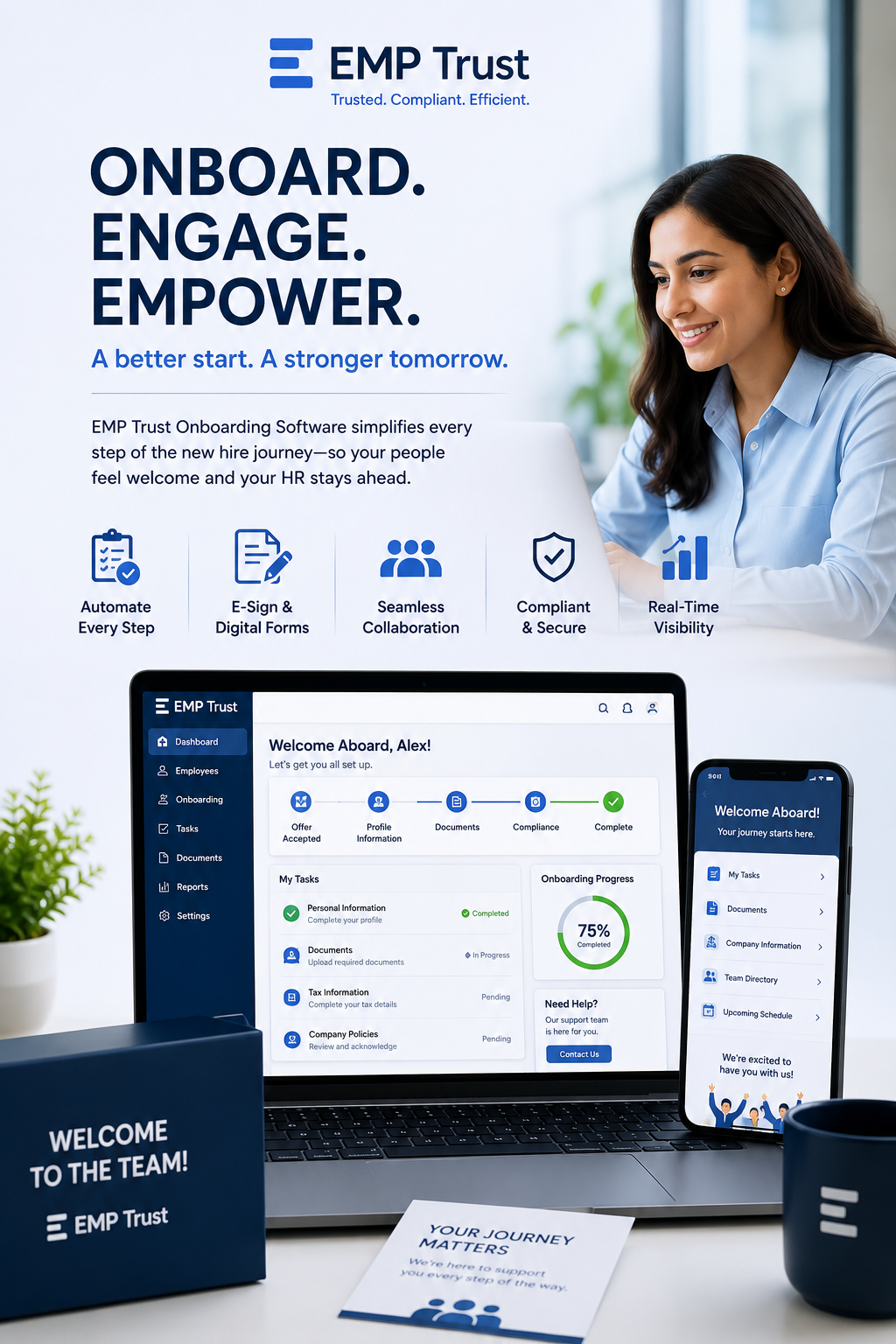
EMPTrust is a comprehensive employee onboarding platform designed to automate and simplify every stage of the onboarding journey. The platform enables HR teams to digitize paperwork, manage compliance, automate workflows, and deliver engaging onboarding experiences for employees across multiple locations.
Whether onboarding remote, hybrid, or in-office employees, EMPTrust helps organizations reduce manual work while ensuring every new hire receives a consistent and personalized experience.
Key Features
- Digital onboarding workflows
- Electronic forms and eSignatures
- Automated task management
- Document management and compliance tracking
- Employee self-service portal
- Integration with HRIS, ATS, payroll, and identity management systems
- New hire dashboards and progress tracking
- Reporting and analytics
Pros
- End-to-end onboarding automation
- Highly configurable workflows
- Excellent compliance management
- Strong enterprise integrations
- Suitable for organizations of all sizes
2. BambooHR
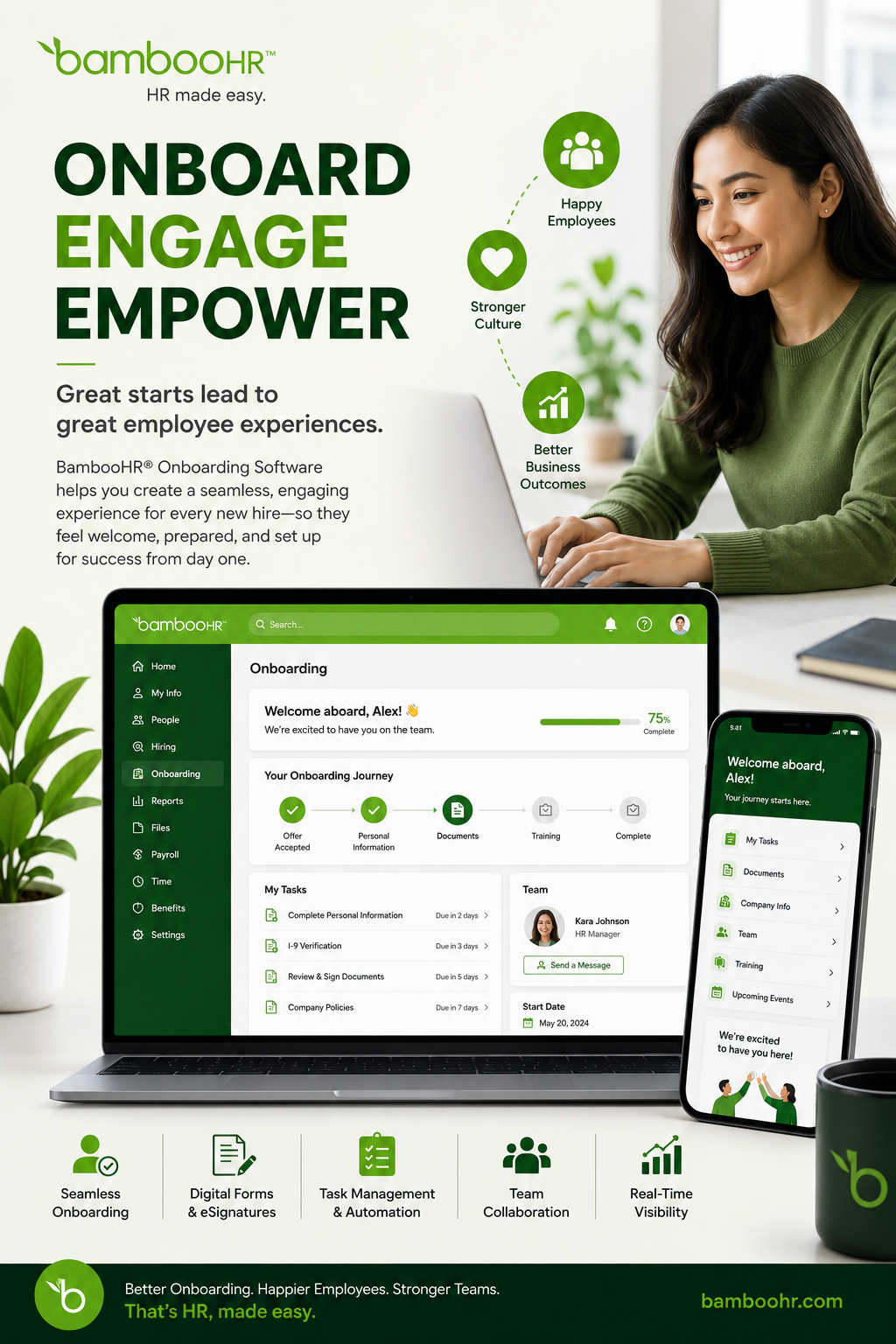
BambooHR offers an intuitive HR platform that simplifies onboarding through automated workflows, digital document management, and employee self-service capabilities. Its user-friendly interface makes it a popular choice among small and mid-sized businesses looking for an all-in-one HR solution.
Key Features
- Custom onboarding workflows
- Electronic document management
- Employee database
- Time-off management
- HR reporting
- Third-party integrations
Pros
- Easy to implement
- Clean and intuitive interface
- Strong HR management capabilities
- Ideal for growing businesses
3. Talmundo
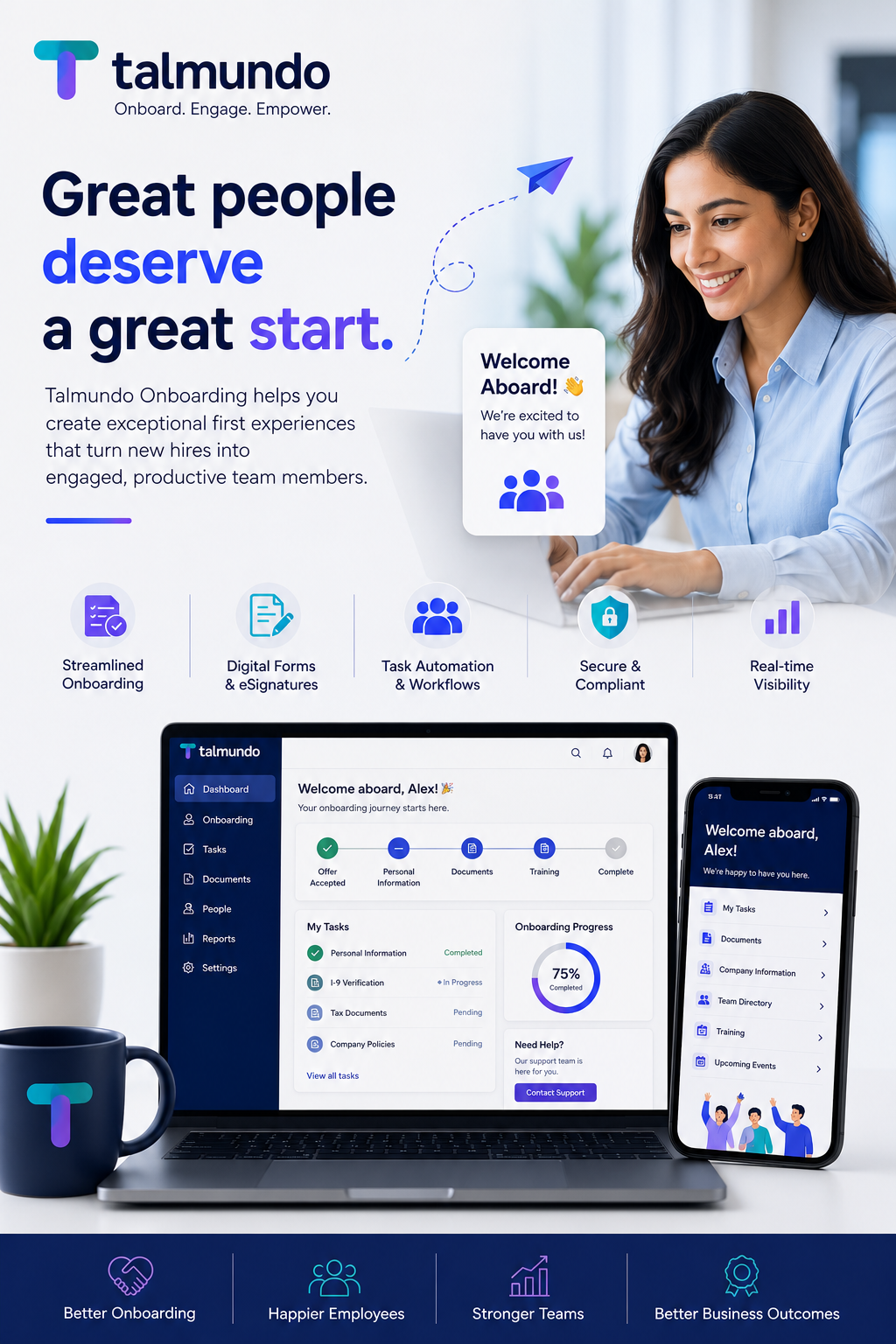
Talmundo specializes in creating engaging onboarding journeys that improve the employee experience before and after the first day. Its personalized workflows and interactive content help organizations increase engagement while reducing administrative effort.
Key Features
- Personalized onboarding experiences
- Interactive learning content
- Employee communication tools
- Progress tracking
- HR analytics
Pros
- Excellent user experience
- Personalized onboarding journeys
- Strong employee engagement features
4. Eddy
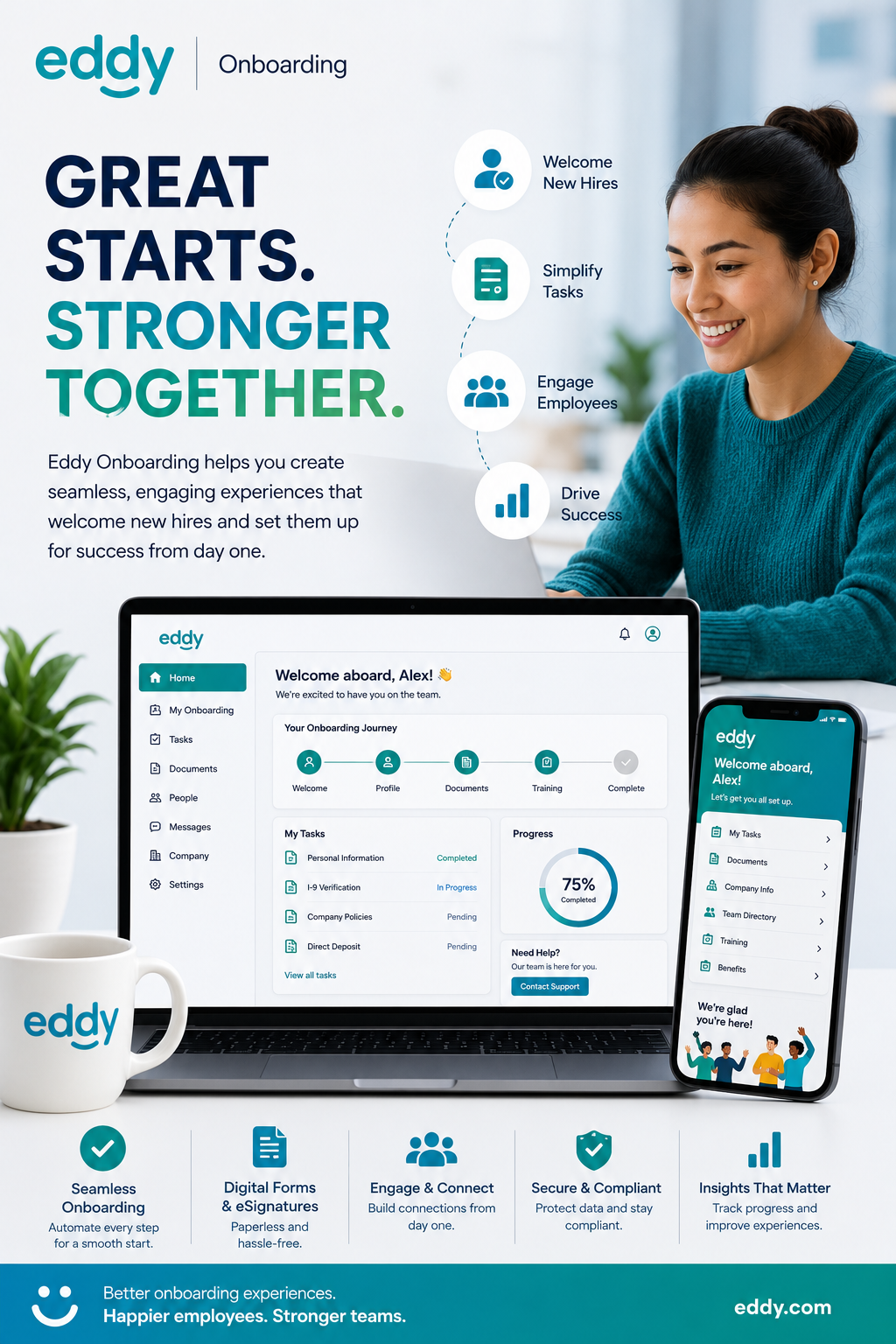
Eddy is designed primarily for small and medium-sized businesses that want a straightforward onboarding solution. The platform combines hiring, onboarding, document management, and employee records in one easy-to-use system.
Key Features
- Onboarding checklists
- Employee document storage
- Digital forms
- Employee self-service
- Task management
Pros
- Affordable pricing
- Easy implementation
- Great for SMBs
- User-friendly interface
5. Zenefits
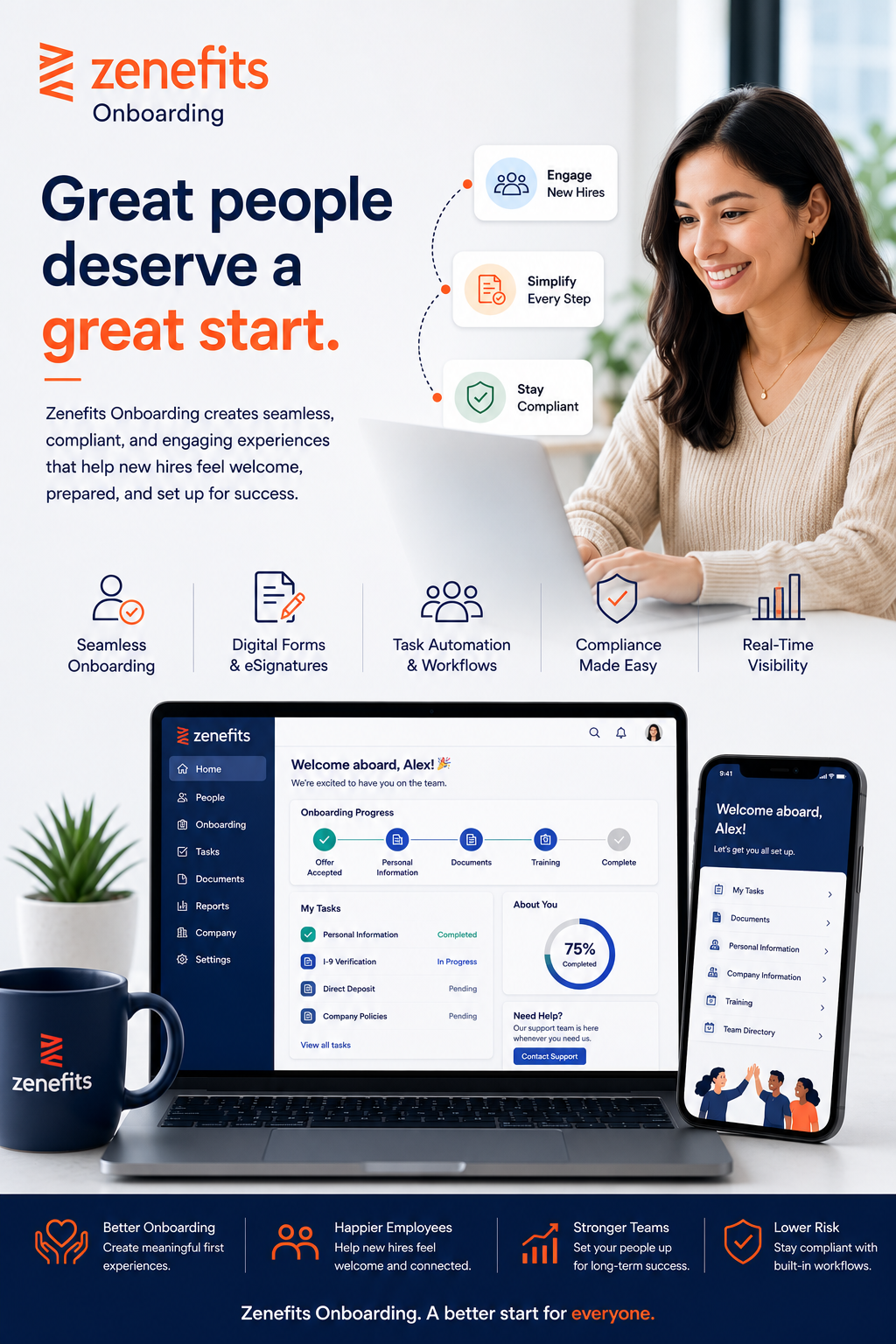
Zenefits combines HR administration, payroll, benefits, and onboarding into a single cloud-based platform. Businesses can automate onboarding workflows while managing compliance and employee records from one centralized system.
Key Features
- Automated onboarding
- Compliance management
- Benefits administration
- Payroll integration
- Employee records
Pros
- Comprehensive HR platform
- Strong automation capabilities
- Good integration ecosystem
6. Lessonly
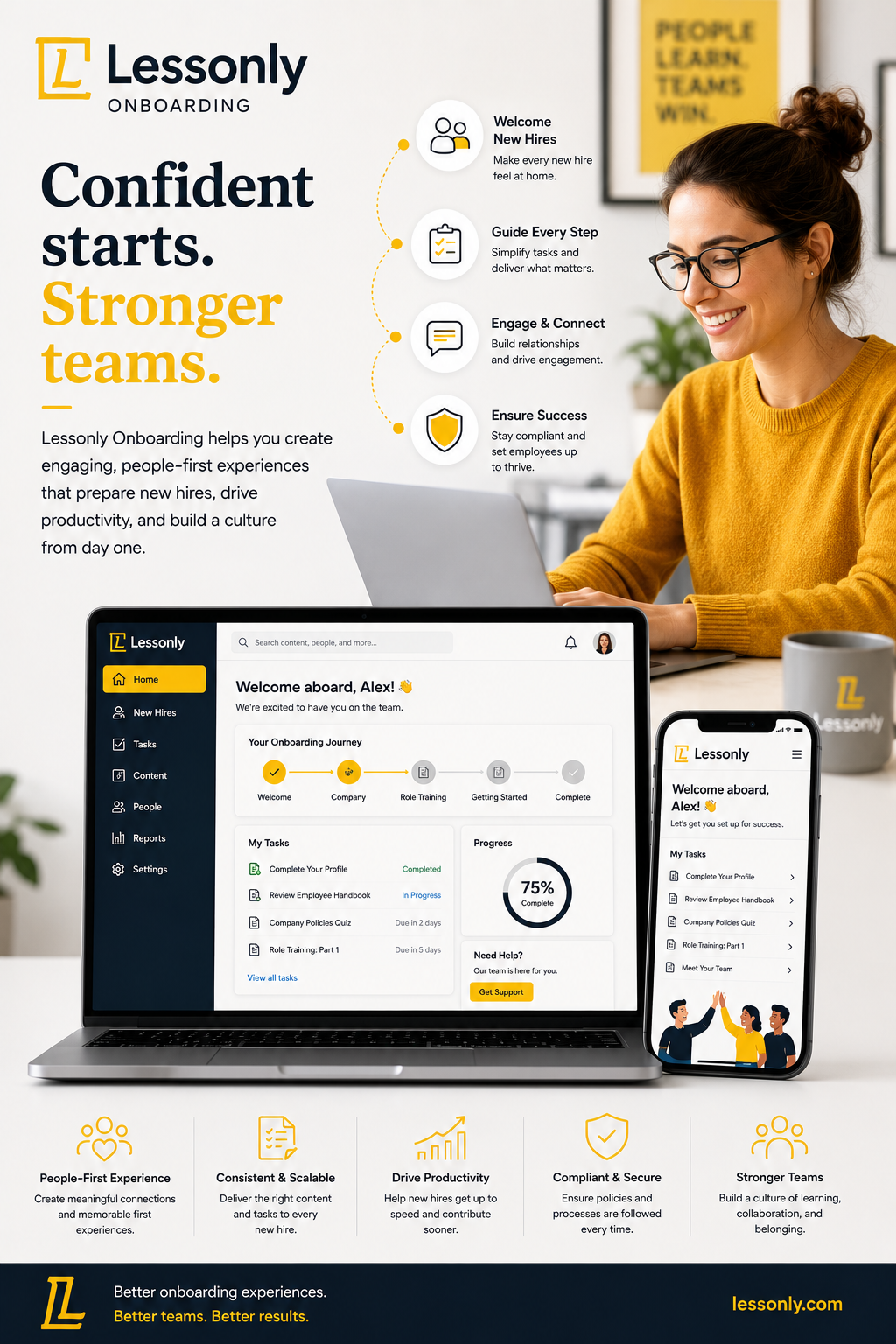
Lessonly focuses on employee learning and development by delivering engaging training experiences. Organizations can build customized learning paths using interactive lessons, quizzes, and assessments that improve knowledge retention.
Key Features
- Interactive training modules
- Learning paths
- Assessments and quizzes
- Performance analytics
- Progress tracking
Pros
- Excellent learning experience
- Interactive content creation
- Strong reporting tools
7. Deel
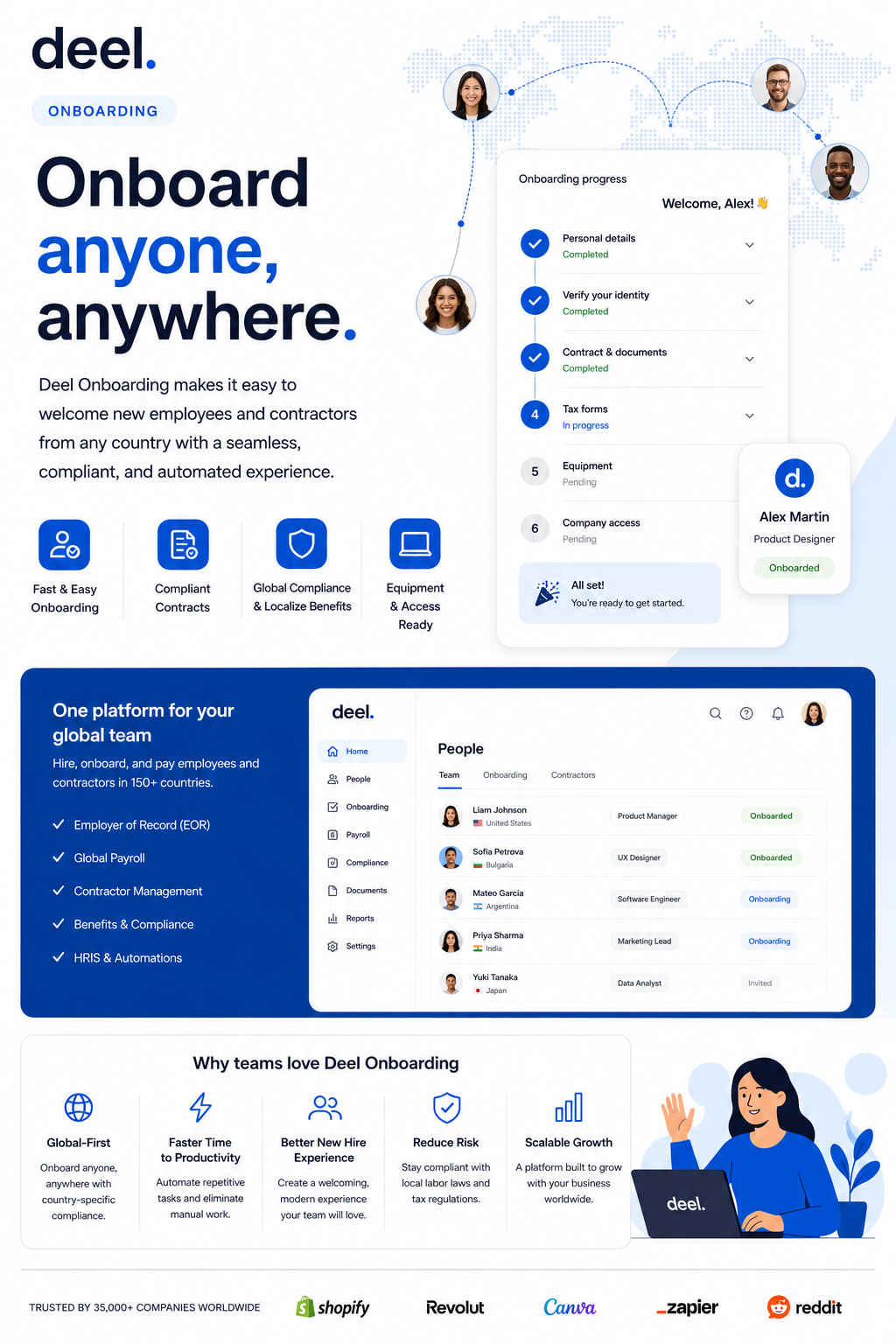
Deel is widely recognized for helping companies onboard international employees and contractors. Its platform simplifies global hiring, compliance, payroll, and document management while supporting remote workforces.
Key Features
- International onboarding
- Digital contracts
- Compliance management
- Global payroll support
- Workflow automation
Pros
- Excellent for global teams
- Strong compliance features
- Easy international hiring
8. Workday
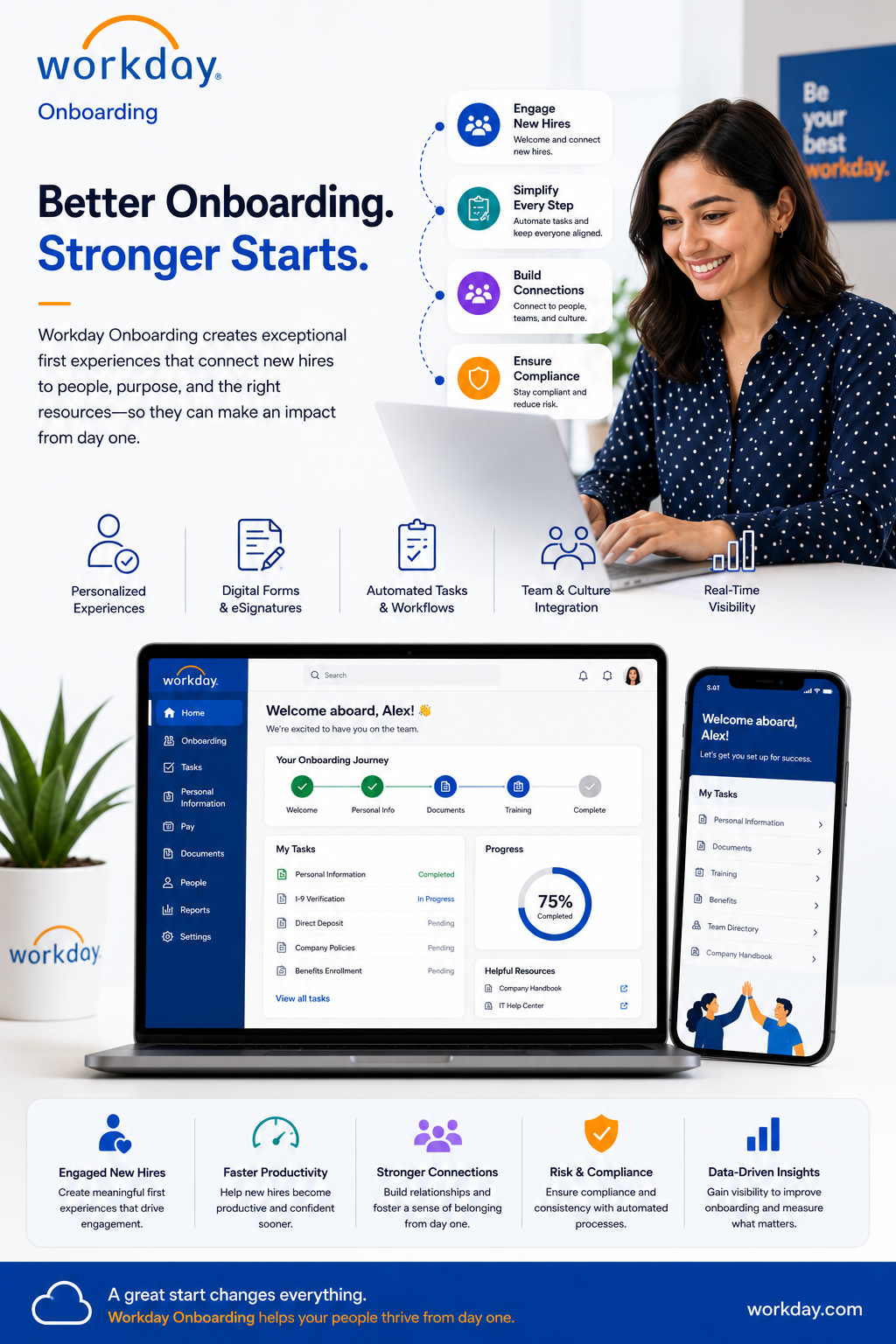
Workday provides enterprise-grade HR software that combines workforce management, onboarding, talent development, and learning into one unified platform. It is well suited for large organizations with complex HR requirements.
Key Features
- Enterprise onboarding
- Learning management
- Performance management
- HR analytics
- Workflow automation
Pros
- Highly scalable
- Comprehensive HR capabilities
- Powerful reporting and analytics
9. ClearCompany
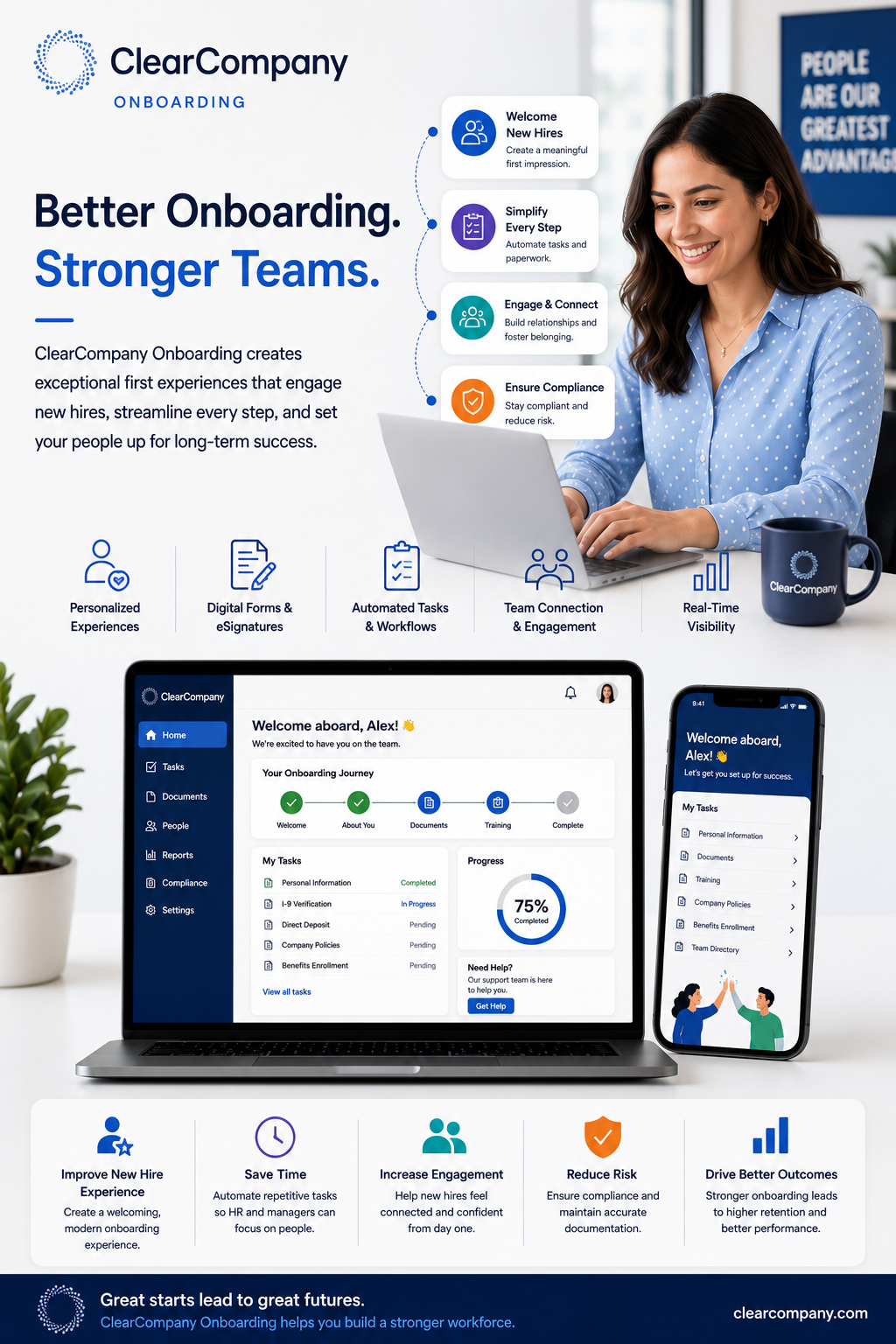
ClearCompany combines talent acquisition, onboarding, employee development, and performance management to support the complete employee lifecycle.
Key Features
- Digital onboarding
- Goal management
- Employee development
- Performance tracking
- HR reporting
Pros
- Strong talent management features
- Easy customization
- Good employee engagement tools
10. Rippling
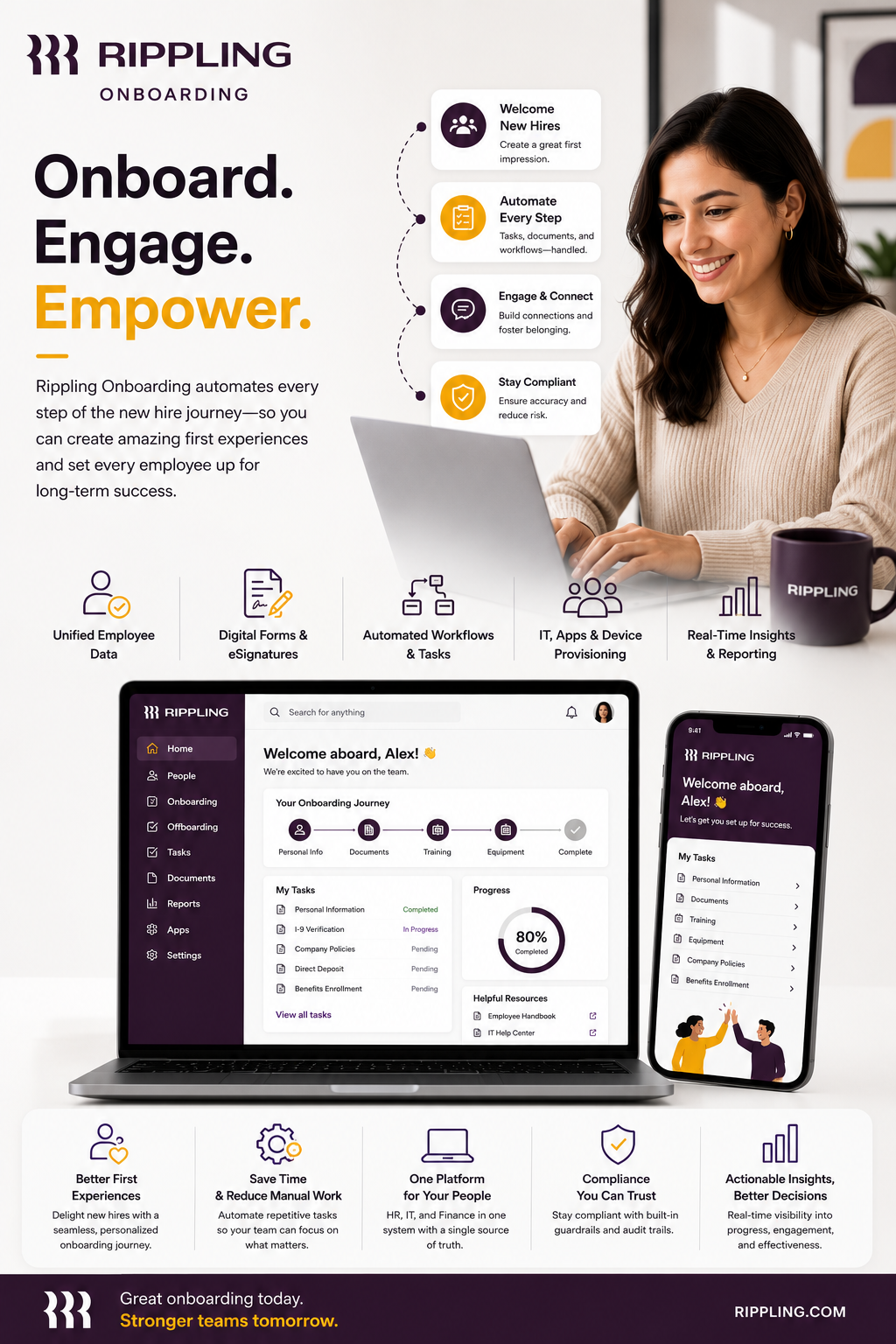
Rippling automates HR, IT, payroll, and onboarding from a single platform. New employees can receive accounts, devices, software access, and required documents automatically based on their role.
Key Features
- Automated onboarding
- Identity and access management
- Device provisioning
- Payroll integration
- Workflow automation
Pros
- Extensive automation
- Excellent IT onboarding capabilities
- Large integration marketplace
11. Trakstar
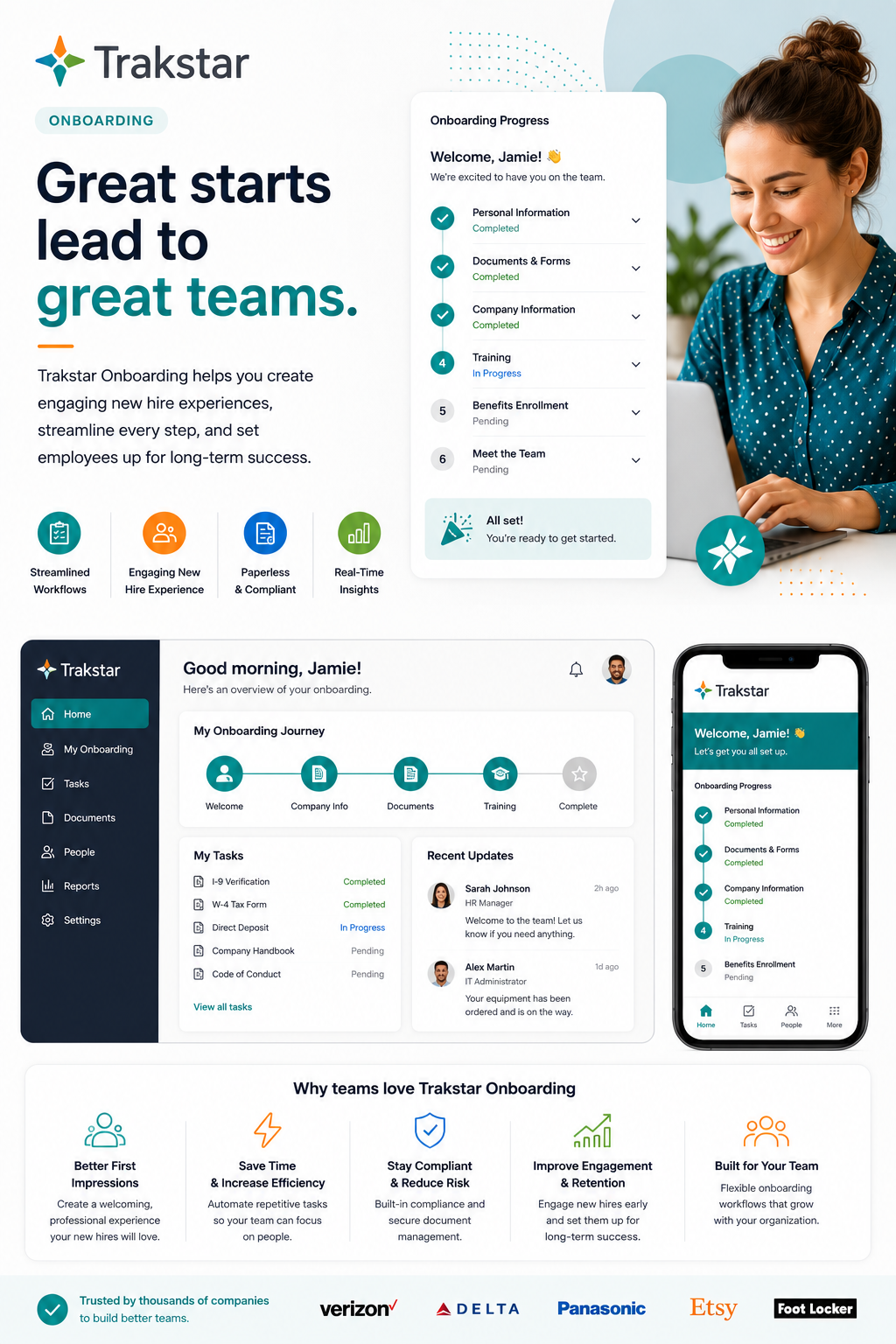
Trakstar focuses on employee performance and continuous development while also supporting onboarding workflows. Organizations can manage goals, reviews, and employee growth within one platform.
Key Features
- Employee onboarding
- Goal management
- Performance reviews
- Learning management
- Progress tracking
Pros
- Strong performance management
- Easy-to-use dashboards
- Supports continuous employee development
Best Practices for Improving Employee Onboarding and Training
Creating a successful onboarding program goes beyond providing paperwork and orientation sessions. Organizations should focus on delivering meaningful experiences that help employees become productive quickly while building long-term engagement.
Personalize the Experience
Customize onboarding plans according to each employee’s role, department, location, and responsibilities. Personalized learning paths create a more relevant and engaging experience.
Encourage Continuous Feedback
Regular feedback from both managers and new hires helps organizations identify gaps in the onboarding process and make improvements over time.
Support Continuous Learning
Employee development should continue well beyond the first week. Offer ongoing learning opportunities through online courses, certifications, workshops, mentoring, and coaching programs.
Make Training Interactive
Incorporate videos, quizzes, simulations, collaborative exercises, and hands-on learning activities to increase engagement and improve knowledge retention.
Set Clear Expectations
Clearly communicate job responsibilities, performance expectations, organizational goals, and success metrics from the beginning.
Involve Managers
Managers play an essential role in helping employees transition successfully into their new positions. Regular check-ins, coaching sessions, and mentoring help employees build confidence.
Automate Administrative Tasks
Automation reduces manual effort by handling document collection, approvals, reminders, compliance tracking, and workflow management, allowing HR teams to focus on employee engagement.
Foster Team Connections
Encourage collaboration through welcome meetings, mentoring programs, virtual introductions, and team-building activities to help new employees feel connected.
Recognize Employee Achievements
Celebrate onboarding milestones and training accomplishments to keep employees motivated and reinforce positive behaviors.
Continuously Optimize the Process
Use onboarding analytics, employee feedback, and performance metrics to evaluate the effectiveness of your onboarding program and make continuous improvements.
How to Choose the Best Employee Onboarding and Training Software
Selecting the right employee onboarding and training software is an important decision that can directly impact employee engagement, productivity, and long-term retention. With many solutions available, organizations should evaluate their options carefully to ensure the platform aligns with their business goals and workforce needs.
- Define Your Business Requirements
Before comparing software solutions, identify your organization’s onboarding challenges and objectives. Consider factors such as company size, hiring volume, remote workforce requirements, compliance needs, and existing HR technology. Understanding these priorities will help you narrow down the platforms that best fit your organization.
- Look for an Intuitive User Experience
A user-friendly platform encourages adoption among both HR teams and new hires. The software should have an intuitive interface, simple navigation, and a streamlined onboarding experience that minimizes the learning curve for administrators and employees alike.
- Choose a Scalable Solution
As your business grows, your onboarding software should grow with it. Select a platform that can support increasing employee numbers, multiple office locations, global hiring, and evolving HR processes without requiring a complete system replacement.
- Evaluate Integration Capabilities
Your onboarding platform should integrate seamlessly with your existing HR ecosystem, including Applicant Tracking Systems (ATS), Human Resource Information Systems (HRIS), payroll platforms, identity management tools, and Learning Management Systems (LMS). Strong integrations eliminate duplicate data entry and create a more efficient workflow.
- Prioritize Customization
Every organization has unique onboarding requirements. Look for software that allows you to customize workflows, forms, branding, training paths, notifications, approval processes, and employee communications. Flexible customization ensures the onboarding experience reflects your company’s culture and processes.
- Ensure Mobile Accessibility
With hybrid and remote work becoming increasingly common, mobile access is essential. Employees should be able to complete onboarding tasks, review documents, sign forms electronically, and access training materials from any device, at any time.
- Review Learning and Training Features
Effective onboarding extends beyond paperwork. Consider platforms that support interactive learning experiences, including videos, assessments, quizzes, certifications, role-based learning paths, and knowledge-sharing resources that help employees develop the skills they need.
- Assess Reporting and Analytics
Data-driven insights enable organizations to improve their onboarding programs continuously. Look for reporting features that provide visibility into onboarding completion rates, employee engagement, training progress, compliance status, and overall program effectiveness.
- Verify Security and Compliance
Employee data is highly sensitive. Choose software that offers enterprise-grade security features such as role-based permissions, data encryption, secure document storage, audit trails, and compliance with industry regulations and data privacy standards.
- Evaluate Customer Support
Reliable customer support is essential for successful implementation and long-term success. Consider vendors that provide onboarding assistance, implementation guidance, knowledge bases, training resources, and responsive technical support.
- Consider Overall Value
Rather than focusing solely on price, evaluate the total value the software delivers. A robust onboarding solution can reduce administrative workload, improve compliance, accelerate employee productivity, and increase retention, delivering a strong return on investment over time.
How EMPTrust Supports Employee Onboarding and Training
EMPTrust is a modern employee onboarding platform designed to simplify and automate every stage of the new hire experience. By combining onboarding workflows, compliance management, document automation, and system integrations into a single platform, EMPTrust helps organizations create a consistent, engaging, and efficient onboarding process.
Here’s how EMPTrust helps organizations improve onboarding and employee development:
- Automated Digital Onboarding
EMPTrust replaces manual paperwork with fully digital onboarding workflows. New hires can complete forms, upload required documents, review company policies, and electronically sign agreements before their first day, reducing administrative effort and improving efficiency.
- Personalized Onboarding Journeys
Organizations can build customized onboarding experiences based on job role, department, location, or employment type. Each employee receives a structured onboarding plan with relevant tasks, training materials, and milestones that guide them through every step of the process.
- Compliance and Document Management
EMPTrust simplifies compliance by securely managing employment documents, policy acknowledgments, tax forms, and regulatory requirements. Automated reminders and audit trails help organizations stay compliant while reducing the risk of missing documentation.
- Seamless HR System Integrations
The platform integrates with leading HRIS, ATS, payroll, identity management, and enterprise applications, enabling employee data to flow automatically across systems and eliminating duplicate data entry.
- Employee Self-Service
New hires can access onboarding tasks, complete required forms, review company resources, and monitor their onboarding progress through an intuitive self-service portal. This empowers employees while reducing HR administrative workload.
- Workflow Automation
EMPTrust automates repetitive onboarding activities such as task assignments, notifications, approvals, document collection, and reminders. HR teams can focus on creating meaningful employee experiences rather than managing manual processes.
- Progress Tracking and Reporting
Real-time dashboards provide HR professionals and managers with visibility into onboarding completion rates, pending tasks, compliance status, and employee progress. These insights help organizations identify bottlenecks and continuously improve their onboarding programs.
- Enhanced Employee Experience
By delivering a structured, engaging, and organized onboarding journey, EMPTrust helps new employees feel welcomed, informed, and prepared from day one. A positive first impression contributes to higher engagement, faster productivity, and improved employee retention.
Employee onboarding and training software has become an essential investment for organizations seeking to improve employee experiences, streamline HR operations, and build a productive workforce. By automating administrative tasks, delivering structured learning experiences, and ensuring compliance, these platforms enable organizations to onboard new hires more efficiently while supporting their long-term growth and success.
When evaluating onboarding software, organizations should consider factors such as ease of use, customization, scalability, integrations, security, reporting capabilities, and employee experience. Selecting the right solution can significantly improve productivity, reduce administrative overhead, and strengthen employee engagement from the very beginning of the employment journey.
EMPTrust stands out as a comprehensive onboarding solution that helps organizations modernize and simplify the entire onboarding process. With powerful workflow automation, digital forms, electronic signatures, compliance management, personalized onboarding journeys, robust integrations, and real-time analytics, EMPTrust enables HR teams to deliver a seamless onboarding experience for every new hire. Whether your organization is onboarding employees in the office, remotely, or across multiple locations, EMPTrust provides the tools needed to create a consistent, engaging, and compliant onboarding program that supports long-term employee success.

