

Recruiting has become increasingly competitive, making efficiency and candidate experience more important than ever. Industry research highlights why organizations are investing in modern Applicant Tracking Systems (ATS):
- Only 12% of employees strongly agree their organization does a great job onboarding new employees, according to Gallup. This highlights the importance of connecting recruiting with onboarding rather than treating them as separate processes.
- According to the Society for Human Resource Management (SHRM), a structured onboarding process can improve employee retention, engagement, and productivity by helping new hires integrate more quickly into their roles.
- Research from LinkedIn consistently shows that a positive candidate experience has a significant impact on employer brand, influencing whether candidates accept offers and recommend an employer to others.
- Modern ATS platforms reduce manual recruiting tasks through automation, allowing recruiters to spend more time building relationships with qualified candidates rather than managing administrative work.
Organizations looking for long-term recruiting success should evaluate an ATS not only on sourcing and applicant tracking capabilities but also on onboarding, compliance, integrations, reporting, and overall employee experience.
In 2026, a great Applicant Tracking System (ATS) does more than just store resumes — it acts as the engine for your company’s growth. With the rise of AI-driven sourcing and the increasing importance of the candidate experience, HR teams need tools that reduce administrative friction and foster genuine connections.
Whether you are a growing SMB or a global enterprise, choosing the right platform is critical.
Based on the latest market trends and software evaluations, here are the top 10 ATS platforms for 2026.
1. EMPTrust: HireOnboard ATS
Best For:
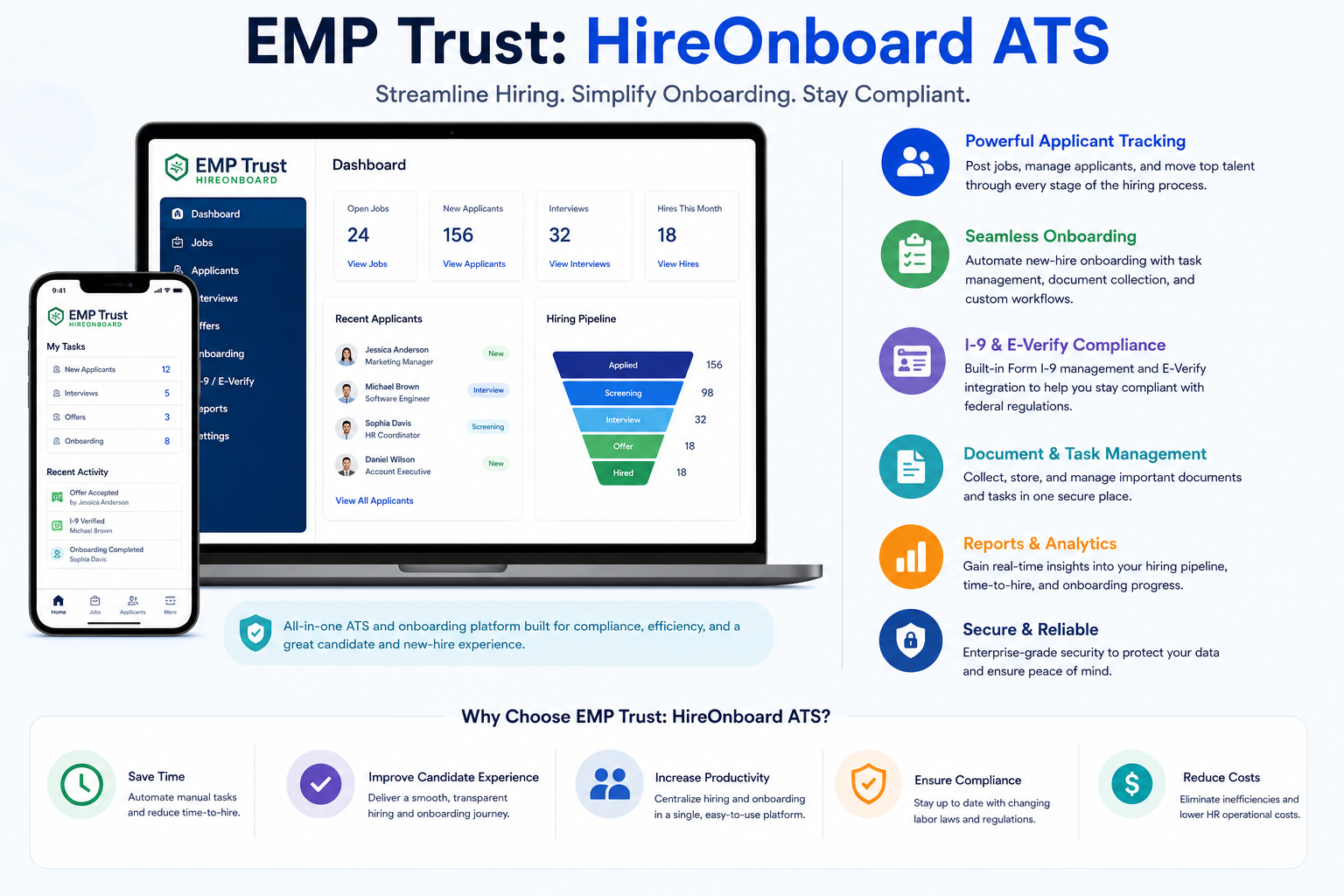
Seamless Full-Cycle Talent Management EMPTrust’s HireOnboard ATS is a standout for 2026 because it solves the “Offer-to-Onboard” gap better than any other provider. While many systems stop at the offer letter, HireOnboard ensures that the transition into the company is flawless.
- Key Feature: One-click conversion from candidate to employee, automatically pushing data into compliance and payroll workflows.
- Why It’s a Leader: It combines robust sourcing and branded career portals with industry-leading compliance tools (Form I-9, E-Verify), making it the ultimate choice for companies that prioritize both speed and security.
2. Rippling Recruiting
Best For:
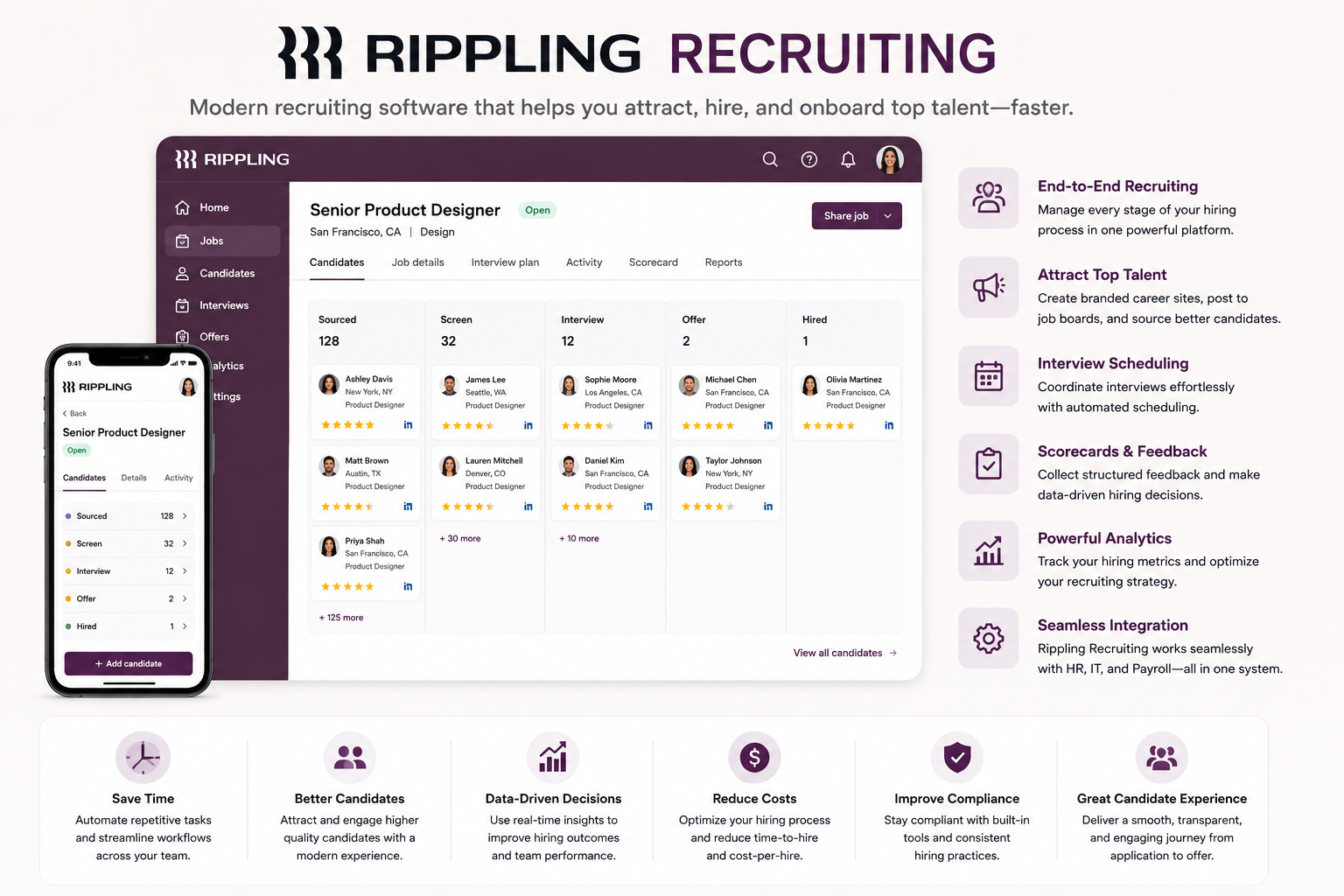
Pre-Built Pipeline Templates Rippling continues to dominate for companies that want a “single source of truth.” Because it is built on a unified employee data platform, it allows HR and Finance to work from the same headcount budgets in real-time.
- Standout: One-click posting to over 25,000 job boards.
3. Greenhouse ATS
Best For:
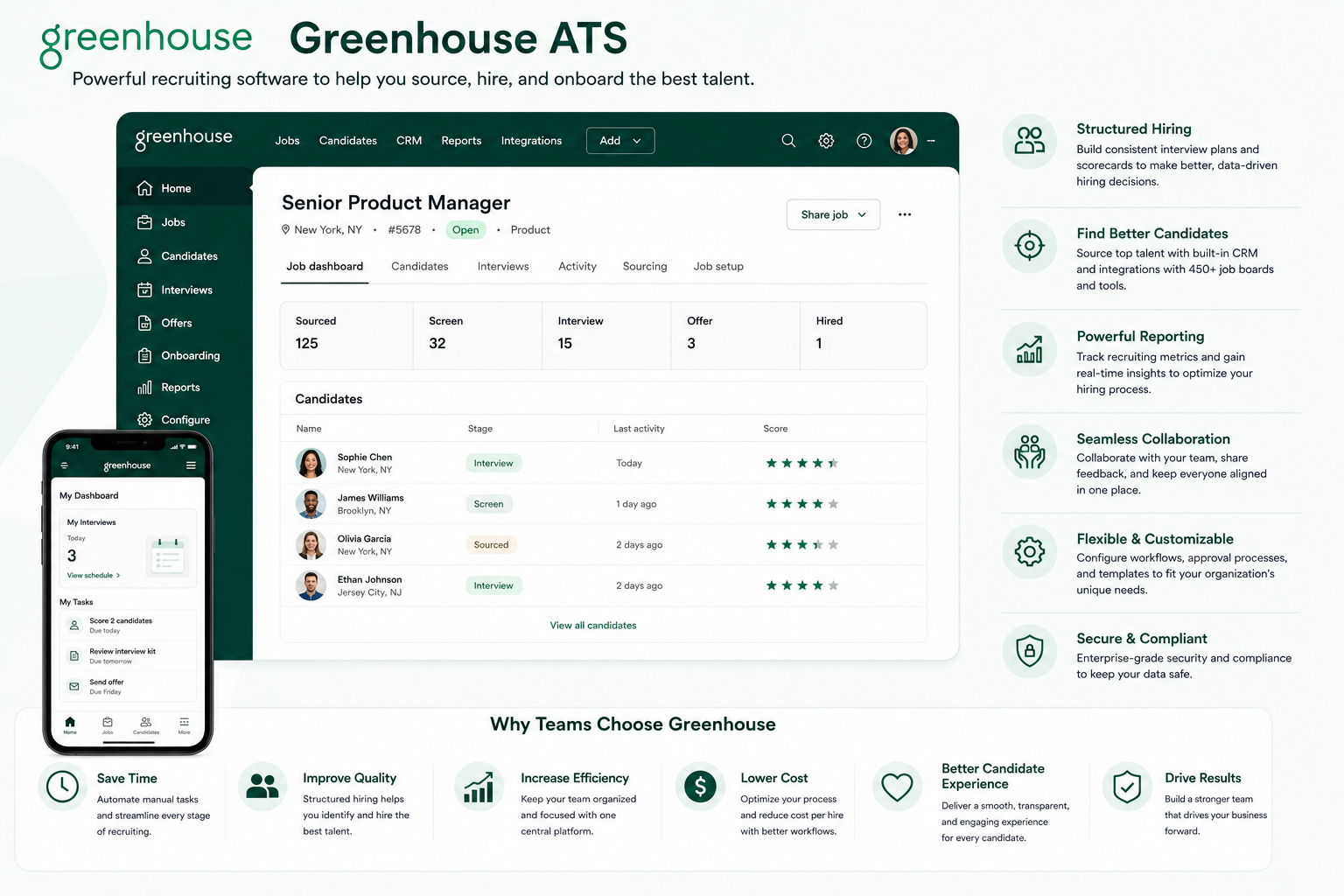
Structured Sourcing and Fair Hiring Greenhouse remains the gold standard for mid-to-large enterprises that value data-driven hiring. It emphasizes “structured hiring,” which uses scorecards to reduce interviewer bias and ensure every candidate is evaluated fairly.
- Standout: Advanced AI-powered interview scheduling and dynamic analytics.
4. BambooHR® ATS
Best For:
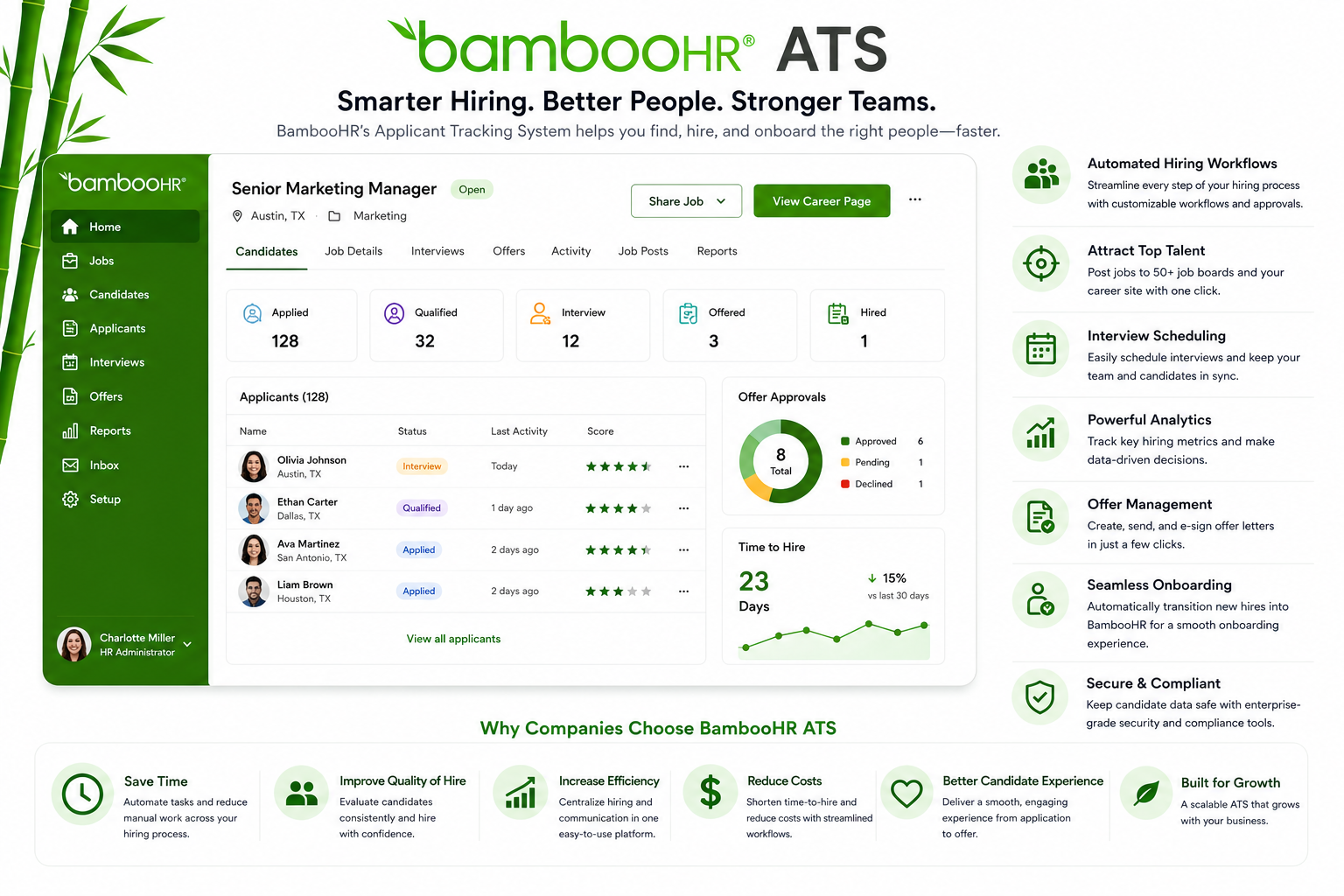
Automated Offers and SMB Analytics For small to mid-sized businesses, BambooHR provides an incredibly user-friendly experience. Its ATS is designed to be intuitive for hiring managers who may not be HR experts, focusing on clear communication and easy-to-read reports.
5. Pinpoint
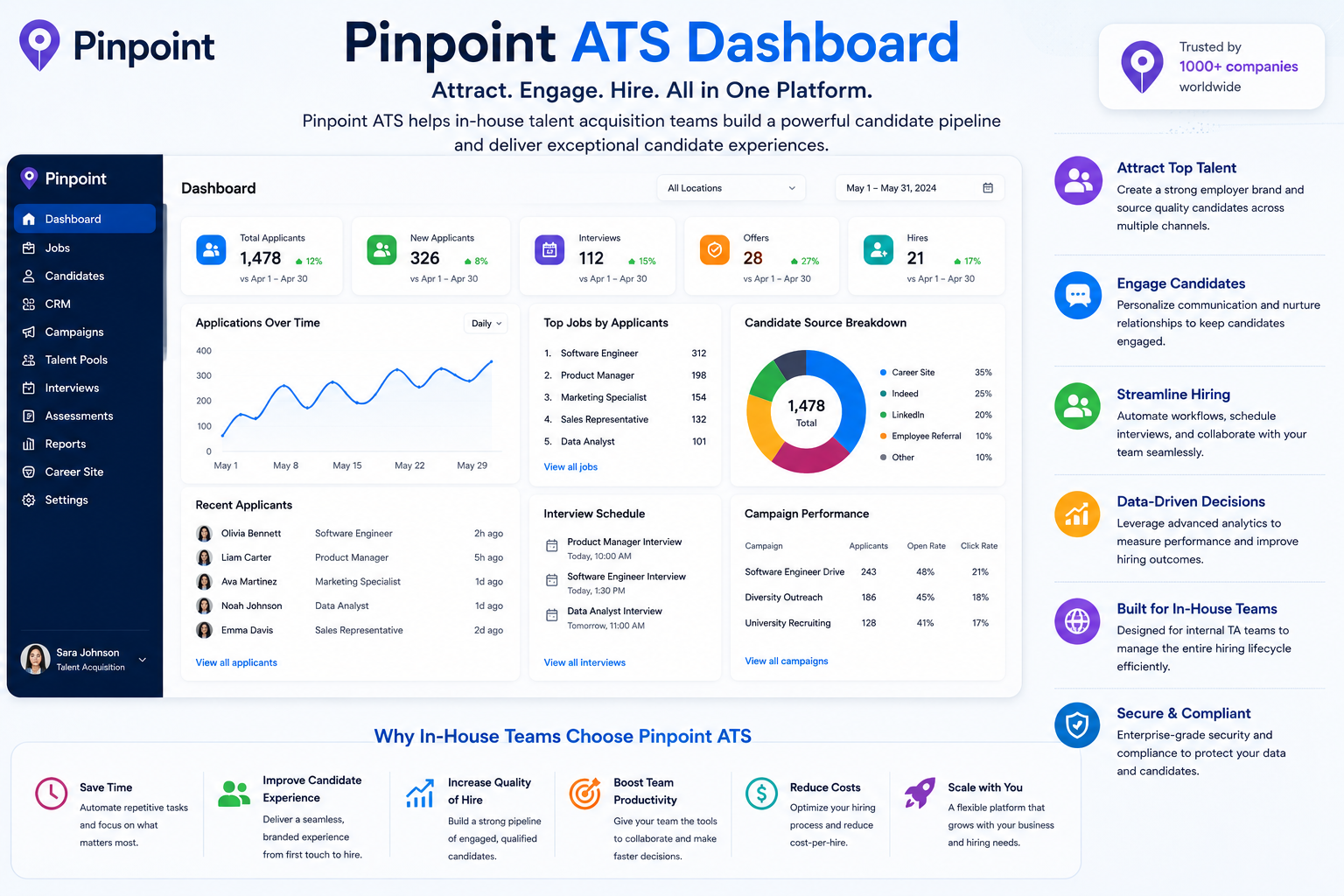
Best For: In-House Talent Acquisition Pinpoint is built for teams that want to reduce their reliance on outside recruitment agencies. It offers deep configurability, allowing in-house teams to build powerful employer brands through custom landing pages.
6. Workable Recruiting
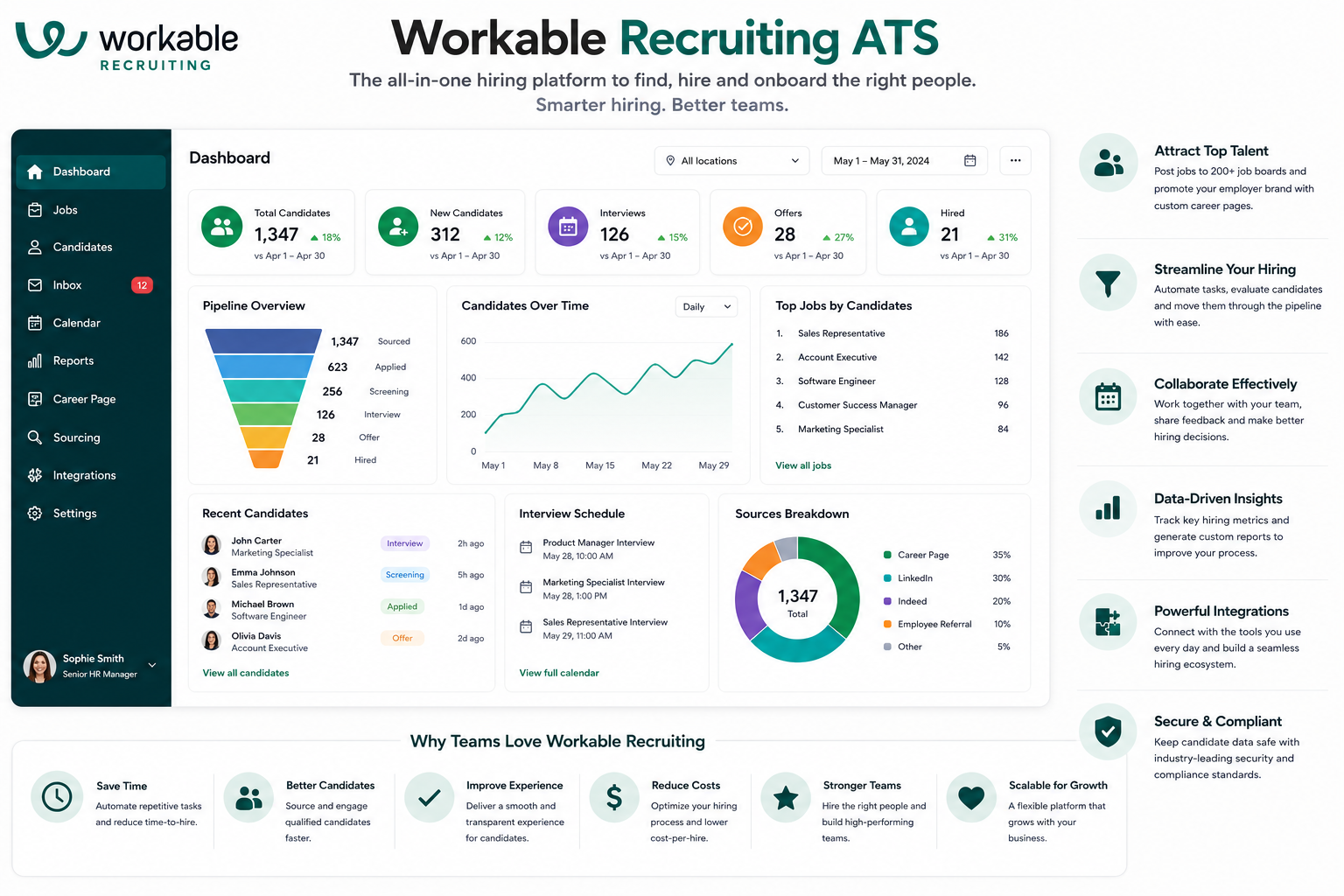
Best For:
Ease of Use and Rapid Setup Workable is the go-to for companies that need to get a job posted now. Its mobile-friendly interface and “quick-apply” features make it a favorite for candidates, while recruiters appreciate the AI-powered candidate matching that surfaces top talent automatically.
7. ClearCompany ATS
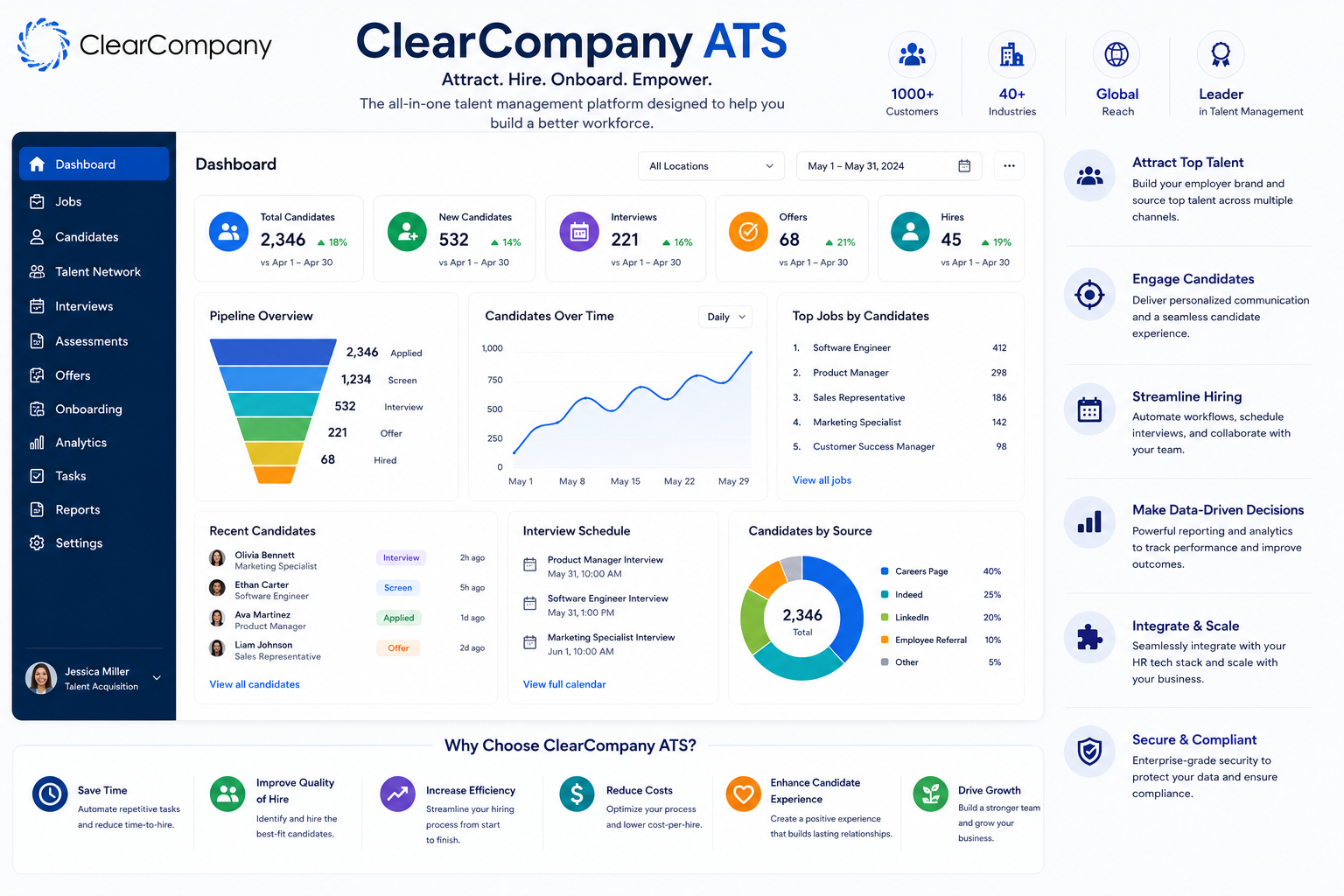
Best For:
Streamlined Hiring Automation ClearCompany excels at creating a “talent success” lifecycle. By linking recruiting directly to performance management and goal setting, they help companies ensure that the people they hire are actually the right fit for the long term.
8. JazzHR
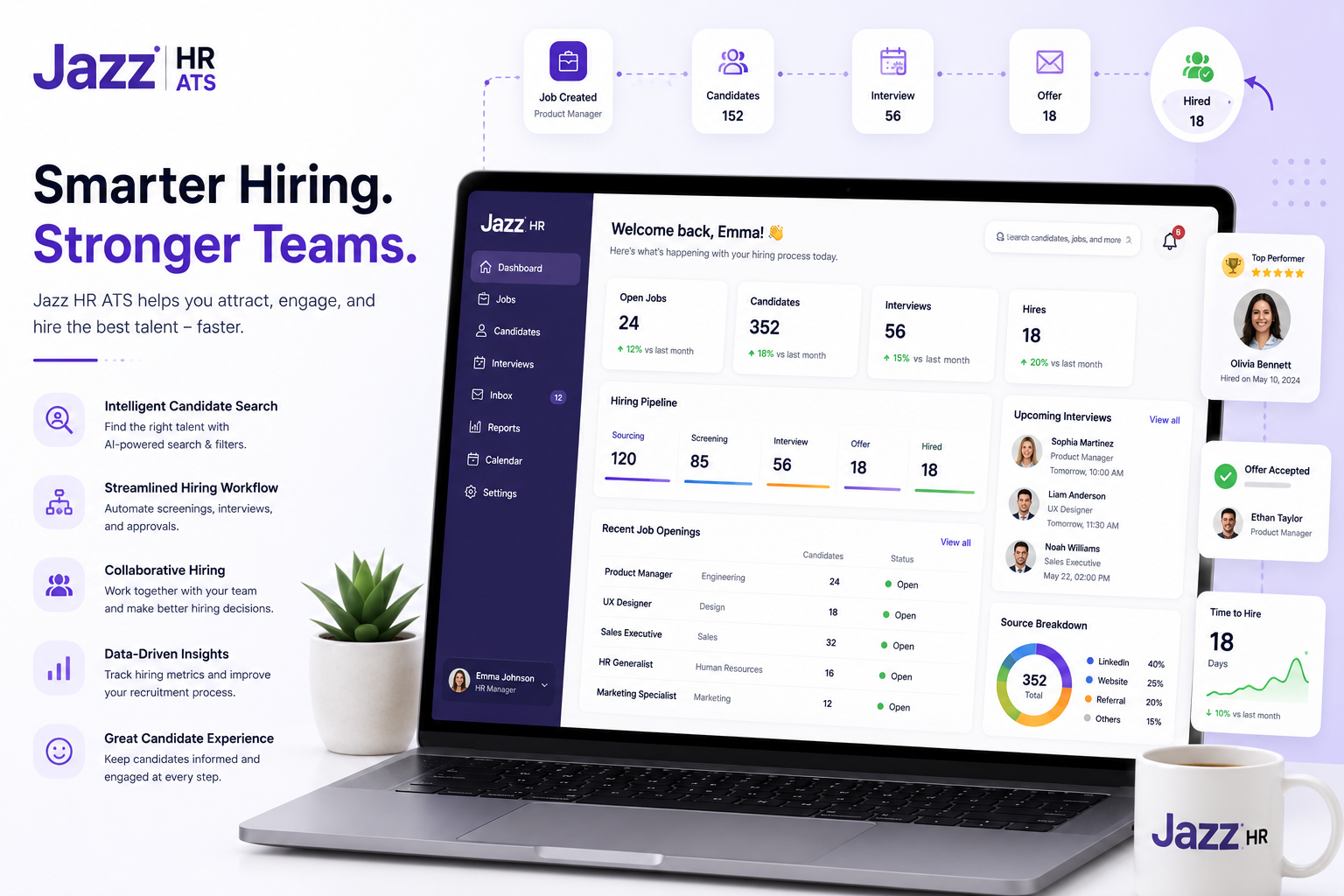
Best For:
Customizable Recruiting Solutions JazzHR is highly regarded for its flexibility and affordability. It allows smaller teams to build high-performance recruiting machines with custom workflows that don’t require a massive enterprise budget.
9. Recruitee
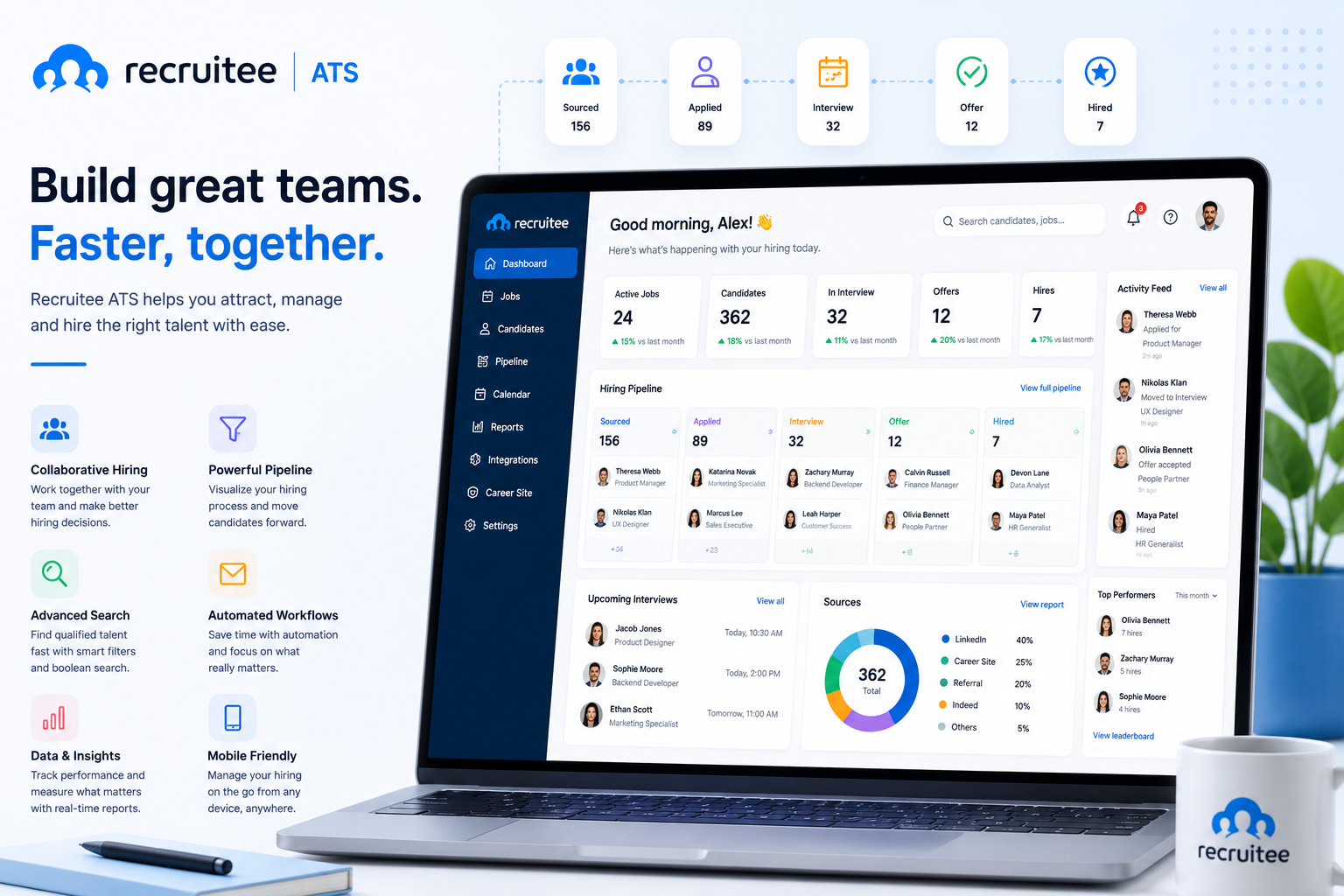
Best For:
Collaborative Hiring Teams Recruitee focuses on the “team” in hiring. Its interface is designed to make it easy for department heads and team members to jump in, leave notes, and move candidates through the pipeline collectively.
10. Zoho Recruit
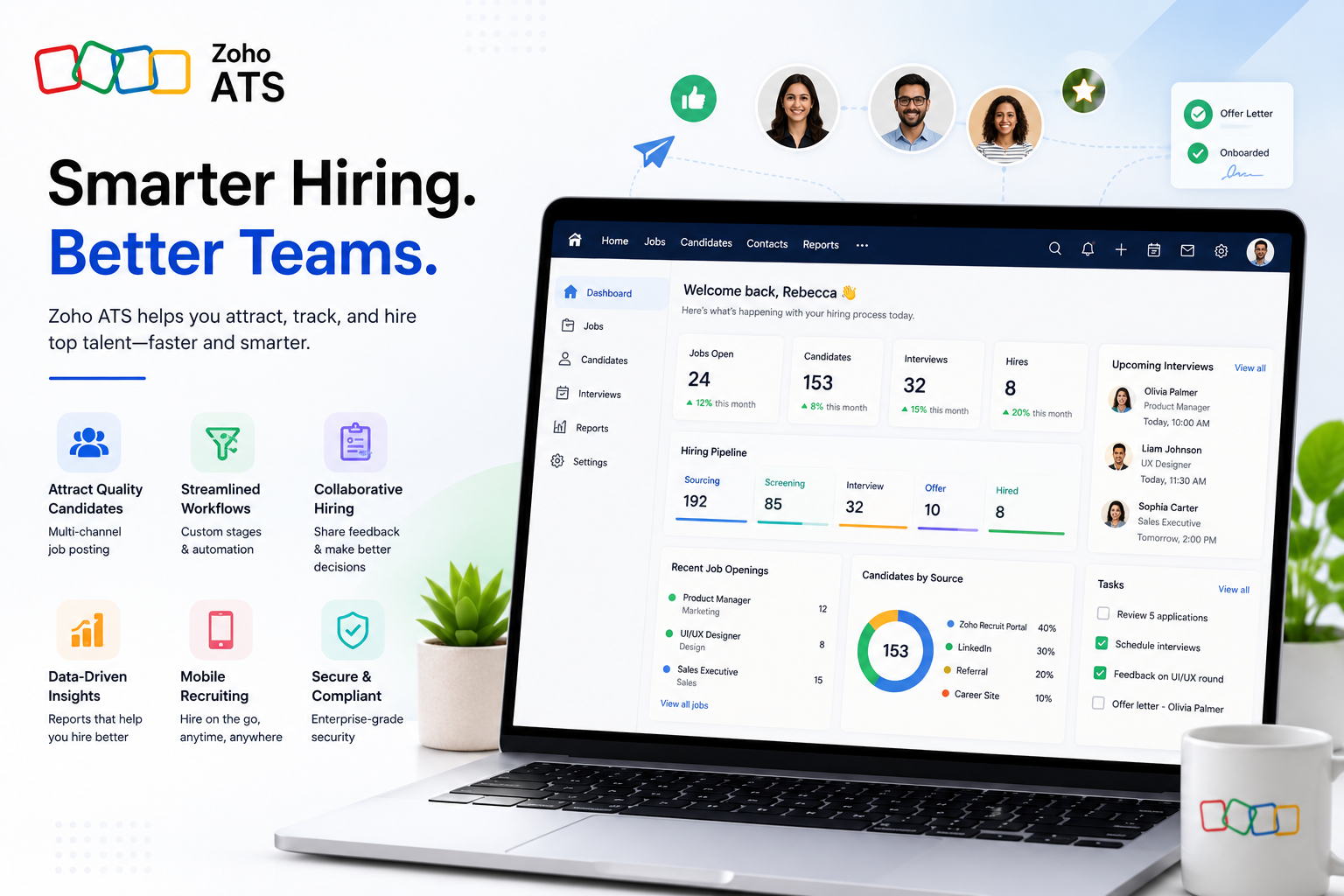
Best For:
Staffing Agencies and Volume Hiring For agencies managing hundreds of roles across multiple clients, Zoho Recruit offers a robust CRM-style approach to applicant tracking. Its automation tools for resume parsing and background checks are top-tier for high-volume environments.
| Platform | Best For | AI | Onboarding | Compliance | Integrations |
|---|---|---|---|---|---|
| EMPTrust HireOnboard | Enterprise hiring & onboarding | ✓ | ✓ | Form I-9, E-Verify | HRIS, ATS, Payroll |
| Rippling Recruiting | HR & IT automation | ✓ | ✓ | Basic | Extensive |
| Greenhouse | Structured enterprise hiring | ✓ | Limited | Basic | Extensive |
| BambooHR | SMB HR & recruiting | Basic | ✓ | Basic | Good |
| Pinpoint | In-house recruiting | ✓ | Limited | Basic | Good |
| Workable | Fast-growing businesses | ✓ | Limited | Basic | Good |
| ClearCompany | Talent management | ✓ | Basic | Basic | Good |
| JazzHR | Affordable recruiting | Basic | No | Basic | Moderate |
| Recruitee | Collaborative hiring | Basic | Limited | Basic | Good |
| Zoho Recruit | Staffing & agencies | ✓ | Limited | Basic | Zoho Ecosystem |


