

Hiring the right people is only the first step. A well-designed onboarding experience helps new employees become productive faster, reduces administrative work, and creates a positive first impression of the organization.
As companies continue embracing hybrid work, digital documentation, and workflow automation, employee onboarding software has become an essential part of modern HR operations. The right platform can automate repetitive tasks, improve compliance, simplify document collection, and provide new hires with a smoother experience from offer acceptance through their first day and beyond.
This guide explores eight employee onboarding platforms that organizations may consider in 2026. Each solution offers different strengths depending on company size, industry, compliance requirements, and HR processes.
1. EMPTrust — Best for Enterprise Onboarding & HR Compliance
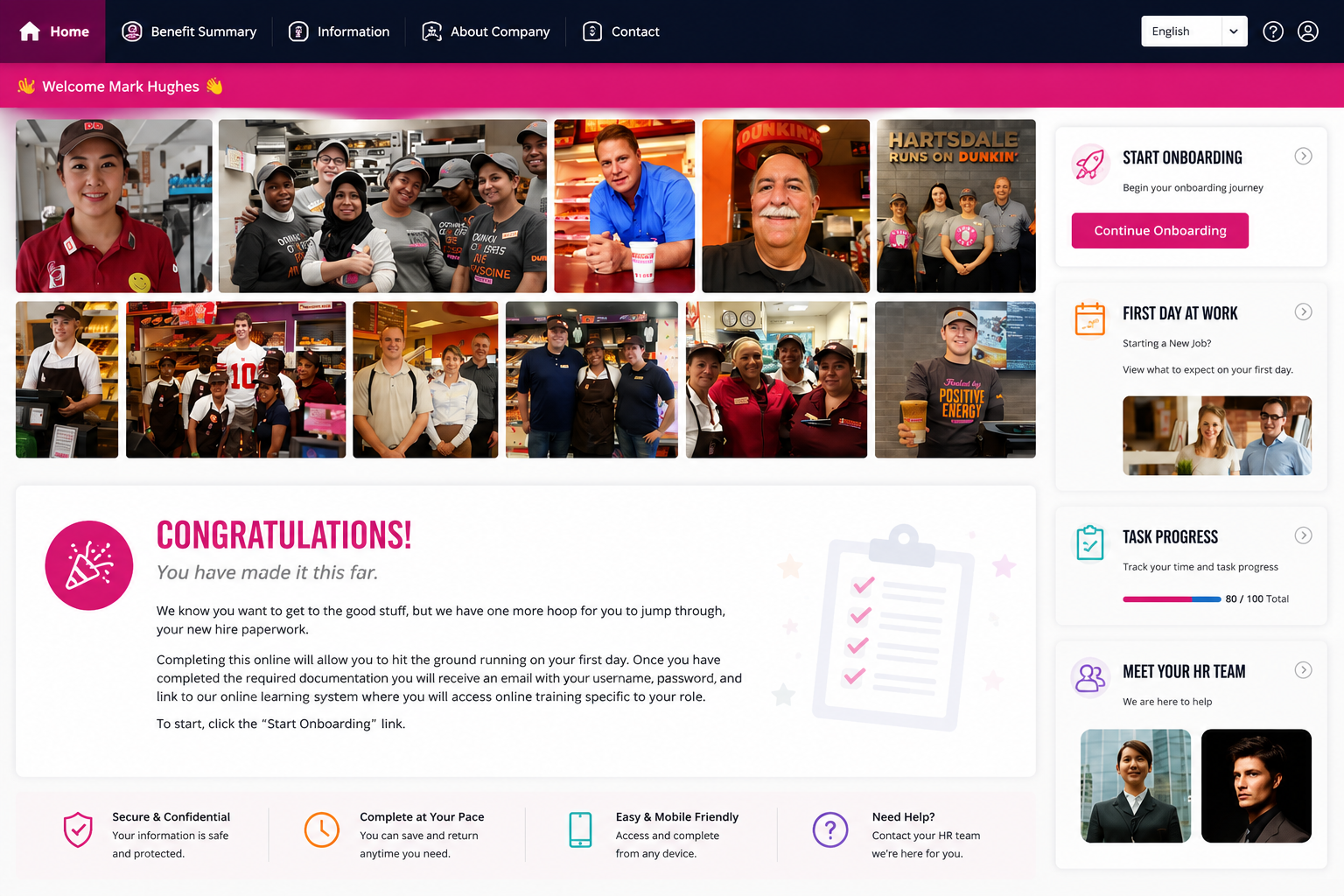
EMPTrust is a cloud-based employee onboarding platform designed to automate many of the administrative tasks involved in hiring and onboarding new employees. The platform focuses on creating a paperless onboarding experience while helping organizations manage compliance requirements and employee documentation.
One of EMPTrust’s strengths is its support for electronic forms, document management, eSignatures, Form I-9, E-Verify, onboarding workflows, and integrations with various HRIS, HCM, and Applicant Tracking Systems. Organizations with distributed or remote workforces may also benefit from its digital onboarding capabilities.
Key Features
- Digital employee onboarding
- Form I-9 and E-Verify support
- Electronic forms and eSignatures
- HR workflow automation
- Document management
- HRIS, ATS, and HCM integrations
- Remote onboarding support
Best suited for: Mid-sized businesses, enterprises, healthcare organizations, staffing firms, higher education, and employers with compliance-focused hiring processes.
2. BambooHR — Best for Small & Mid-Sized Businesses
BambooHR has become a popular HR platform among growing businesses because of its intuitive interface and broad HR functionality. Along with onboarding, it includes employee records, PTO management, reporting, and performance management features.
The onboarding module allows HR teams to assign tasks, distribute documents, collect employee information, and automate many routine processes.
Key Features
- Employee database
- Digital onboarding checklists
- Electronic document collection
- Time-off tracking
- Employee self-service
- Reporting and analytics
Best suited for: Small and medium-sized businesses seeking an easy-to-use HR platform.
3. Rippling — Best for HR, Payroll & IT Automation
Rippling combines HR, payroll, benefits, identity management, and IT provisioning into a single platform. In addition to employee onboarding, organizations can automatically create user accounts, assign devices, configure software access, and manage payroll from one system.
Its extensive automation capabilities make it attractive for organizations looking to streamline multiple operational processes.
Key Features
- HR onboarding
- Payroll automation
- IT device management
- Software provisioning
- Identity management
- Workflow automation
- Hundreds of integrations
Best suited for: Companies wanting to automate both HR and IT onboarding.

4. Greenhouse — Best for Recruiting-to-Onboarding Transition
Greenhouse is widely recognized as an Applicant Tracking System, but it also helps organizations create a smoother transition between recruitment and onboarding.
Instead of starting over after a candidate accepts an offer, Greenhouse enables HR teams to transfer candidate information into onboarding workflows, reducing duplicate data entry and improving the hiring experience.
Key Features
- Applicant Tracking
- Offer management
- Hiring workflow automation
- Candidate communication
- Recruiting analytics
- Integration ecosystem
Best suited for: Organizations focused on improving recruiting and hiring efficiency.
5. Workday — Best for Large Enterprise Organizations
Workday is one of the most comprehensive Human Capital Management (HCM) platforms available. Large enterprises often choose Workday because it combines onboarding with HR, payroll, workforce planning, finance, analytics, and talent management.
Key Features
- Enterprise HCM
- Employee onboarding
- Workforce planning
- Payroll
- Talent management
- Global HR capabilities
- Advanced reporting
Best suited for: Large enterprises and multinational organizations.

6. Zoho People — Best Value for Growing Businesses
Zoho People offers a range of HR management capabilities at a price point that appeals to startups and growing businesses. The platform includes onboarding, employee records, leave management, attendance tracking, and workflow automation.
Businesses already using other Zoho applications may find the ecosystem integration particularly convenient.
Key Features
- Employee onboarding
- Employee database
- Leave management
- Attendance tracking
- HR workflows
- Employee self-service
Best suited for: Small businesses and organizations using the Zoho ecosystem.
Press enter or click to view image in full size

7. ClearCompany — Best for Talent Management
ClearCompany combines recruiting, onboarding, performance management, and employee engagement into a unified talent management platform.
Its onboarding features focus on helping organizations create structured new hire experiences while maintaining consistency across departments.
Key Features
- Digital onboarding
- Recruiting
- Performance management
- Goal tracking
- Employee engagement
- Talent management
Best suited for: Organizations seeking an integrated talent management platform.
Press enter or click to view image in full size

8. Click Boarding — Best for Employee Experience
Click Boarding focuses on helping organizations deliver engaging onboarding experiences through personalized workflows, automated communications, and digital task management.
Beyond onboarding, the platform also supports employee transitions such as promotions and internal transfers.
Key Features
- Personalized onboarding journeys
- Task automation
- Employee communications
- Digital forms
- Workflow management
- Transition management
Best suited for: Organizations prioritizing employee engagement throughout the onboarding journey.
Press enter or click to view image in full size

How to Choose the Right Employee Onboarding Software
When comparing onboarding platforms, consider factors such as:
- Company size and expected growth
- Compliance requirements
- HRIS and ATS integrations
- Workflow customization
- Remote onboarding capabilities
- Electronic document management
- Reporting and analytics
- Ease of implementation
- Customer support
- Overall cost of ownership
No single platform is ideal for every organization. The right solution depends on business goals, existing HR technology, regulatory requirements, and employee experience priorities.
Employee onboarding software has evolved well beyond digital paperwork. Modern platforms now support workflow automation, compliance management, employee communication, analytics, and integrations across the broader HR technology ecosystem.
Solutions such as EMPTrust, BambooHR, Rippling, Greenhouse, Workday, Zoho People, ClearCompany, and Click Boarding each address different organizational needs. Businesses evaluating onboarding software should compare features, integration capabilities, scalability, and long-term support before making a decision.
Investing in the right onboarding platform can help reduce manual administrative work, improve compliance, accelerate new hire productivity, and create a more consistent onboarding experience for every employee.
Feature Comparison
| Platform | Remote I-9 | E-Verify | Workflow Automation | Compliance Focus |
|---|---|---|---|---|
| EMPTrust | ✓ | ✓ | ✓ | High |
| Rippling | Optional | Optional | ✓ | High |
| Greenhouse Onboarding | Limited | Limited | ✓ | Medium |
| Click Boarding | Limited | Limited | ✓ | Medium |
| Bamboo HR | ✓ | ✓ | ✓ | High |
| Zoho | ✓ | Limited | ✓ | High |
Choosing the Right Onboarding Software
The best onboarding solution depends on your organization’s priorities:
- For compliance-heavy hiring programs, prioritize remote I-9 and E-Verify capabilities.
- For high-volume hiring, focus on automation and workflow management.
- For distributed workforces, ensure strong remote onboarding functionality.
- For enterprise deployments, evaluate integration and reporting capabilities.
Organizations today need onboarding software that goes beyond paperwork. The most successful implementations combine automation, compliance management, employee engagement, and integration with existing HR systems. Whether evaluating EMPTrust, HireOnboard, Greenhouse Onboarding, Click Boarding, Efficient Hire, or WorkBright, organizations should align platform capabilities with their hiring volume, compliance requirements, and employee experience goals.


