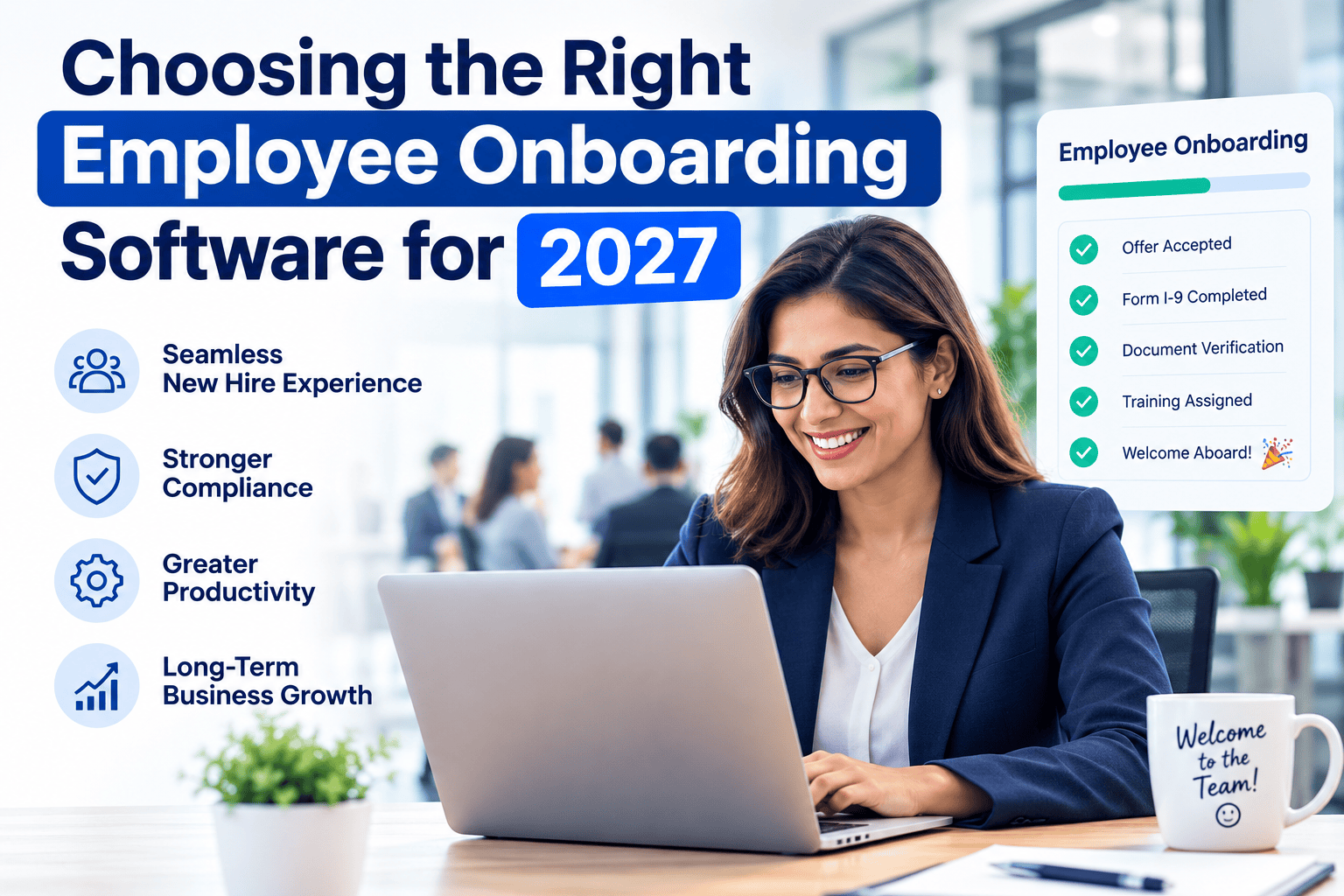

For a long time, Form I-9 management functioned as a basic administrative task. However, in 2026, shifting regulatory standards and an active enforcement environment have transformed employment eligibility verification into a high-stakes data management challenge.
Immigration and Customs Enforcement (ICE) has updated its inspection guidelines. Minor paperwork slips that previously received a 10-day correction window now count as substantive violations. These carry immediate fines ranging from $288 to $2,861 per non-compliant Form I-9.
To evaluate your organization’s audit exposure, your HR leadership team should review these 5 critical Form I-9 compliance questions.
What Counts as a Substantive Form I-9 Violation in 2026?
Under the current ICE framework, missing, incomplete, or incorrectly transcribed data in Section 2 constitutes an immediate substantive violation. Historically, if an HR manager missed a document number but retained a photocopy of the employee’s passport, auditors treated the error as a correctable technical oversight. Today, the agency has eliminated that rule. Relying on a fallback photocopy to fix mistakes after the fact does not excuse missing data on the form itself, and your business faces immediate liability for each incomplete document field.
Can Employers Legally Verify Form I-9 Documents Remotely?
Yes, but only under specific regulatory conditions. The Department of Homeland Security (DHS) alternative remote examination procedure allows teams to check documents over live video rather than in person, but the rule requires employers to be active, enrolled participants in E-Verify at the time of hire. If your team verifies remote employees via video conference without active E-Verify enrollment, or if they forget to check the mandatory “Alternative Procedure” box in Section 2, ICE logs the action as an immediate substantive failure.
What Are the Latest State E-Verify Requirements for Employers?
While E-Verify remains optional at the federal level for most private employers, state-level legislation has accelerated. A growing number of states now mandate E-Verify enrollment for private businesses based on specific headcount thresholds. Because these rules vary significantly by geography, operating across multiple states means your compliance workflow can no longer remain uniform; it must adapt dynamically to local jurisdiction laws to prevent sudden compliance penalties and operational disruptions.
How Do Employers Track Expiring Work Authorizations and Reverification Deadlines?
Many organizations still rely on manual spreadsheets and calendar reminders to track expiring employment authorization documents (EADs) and Temporary Protected Status (TPS) automatic extensions. This approach creates vulnerability to accidental non-compliance. Under the strict guidelines, missing a deadline or executing an incomplete reverification in Supplement B results in mandatory fines. Continuous compliance tracking requires an automated system that monitors your I-9 data fields and flags upcoming expiration dates before a deadline passes.
How Can Organizations Reduce Form I-9 Audit Risk and Compliance Penalties?
Mitigating risk requires standardizing your workflows across all company locations to catch mistakes during the onboarding process rather than during an ICE inspection. Organizations can eliminate manual data-entry errors by combining structured digital data entry with an automated tracking system. Implementing a secure electronic onboarding platform handles the repetitive verification and tracking tasks, ensuring that required fields are validated and your documentation remains audit-ready.
Heading to #SHRM26? Let’s Connect.
Managing changing state laws, remote verification rules, and automated reporting requires the right tools.
If you are traveling to the SHRM Annual Conference in Orlando (June 16–19), stop by Booth #4343. The EMP Trust team—including Elayne and Jess—will be on the expo floor to answer your compliance questions and show you how our electronic Form I-9, remote verification tools, and intelligent reporting features manage your workforce compliance workflows.
[Click here to request a brief demo of our Electronic Form I-9 platform today.]